Case Study
Bridging 5G Theory and Practice: Inside SIT’s 5G Translation Lab with CloudRAN.AI

5G Innovation Moves from Lab to Real World
The promise of 5G goes far beyond faster phone speeds. Ultra-reliable low-latency networks are poised to enable autonomous drones, smart robots, remote VR training, and countless other innovations. Yet turning these ideas into reality requires testing them in realistic settings – bridging theory with practice. This is where 5G testbeds and “translation labs” come in.
Around the world, universities and industry consortia are building 5G sandboxes where new applications can be tried safely before wider deployment. These environments let engineers fine-tune prototypes on dedicated private 5G networks without the constraints of commercial systems.
It’s a necessary step: by the end of 2024 there were over 4,700 private LTE/5G networks operating globally (worth ~$1.8B) as enterprises big and small race to develop 5G use cases. The push is on to turn 5G’s hype into tangible value.
From Theory to Reality: The Rise of 5G “Translation Labs”
Traditional telecom research labs often focus on fundamental technology or theoretical models. In contrast, 5G translation labs focus on applied innovation – translating new 5G capabilities into practical industry solutions. Instead of isolated experiments, these labs simulate real-world deployment scenarios in a controlled setting. This approach helps bridge the gap between what 5G can do in theory and how it performs for actual business use cases.
Singapore has been a leader in this applied approach. As part of a national future communications programme, new facilities were set up specifically to accelerate industry adoption of 5G. For example, the Future Communications Translation Lab (FCTLab) was established in 2021 at the Singapore Institute of Technology (SIT) to “facilitate the innovation and technology translation of 5G and other future communication technologies” . In simple terms, it’s a place where companies and researchers can develop, test and refine 5G applications in a realistic environment – effectively moving from concept to prototype.
Unlike a purely academic lab, the focus here is on applied outcomes: working with industry partners to solve real problems and co-create solutions ready for market. These translation labs serve as open innovation hubs where academia, industry, and government collaborate to make 5G use cases actually work outside of PowerPoint slides.


Inside SIT’s Future Communications Translation Lab (FCTLab)
SIT’s FCTLab is a prime example of theory-to-practice in action. Backed by Singapore’s Infocomm Media Development Authority, it was launched to “facilitate industry adoption of nascent technologies in 5G and future communications”, enabling open innovation, learning, testing and validating of new tech with various industries.
Since 2021, the lab has actively built partnerships for 5G test-bedding and application prototyping. In just a few years, it has supported numerous pilot projects – roughly 20 different 5G use cases to date – across domains like drones, robotics, and augmented reality.
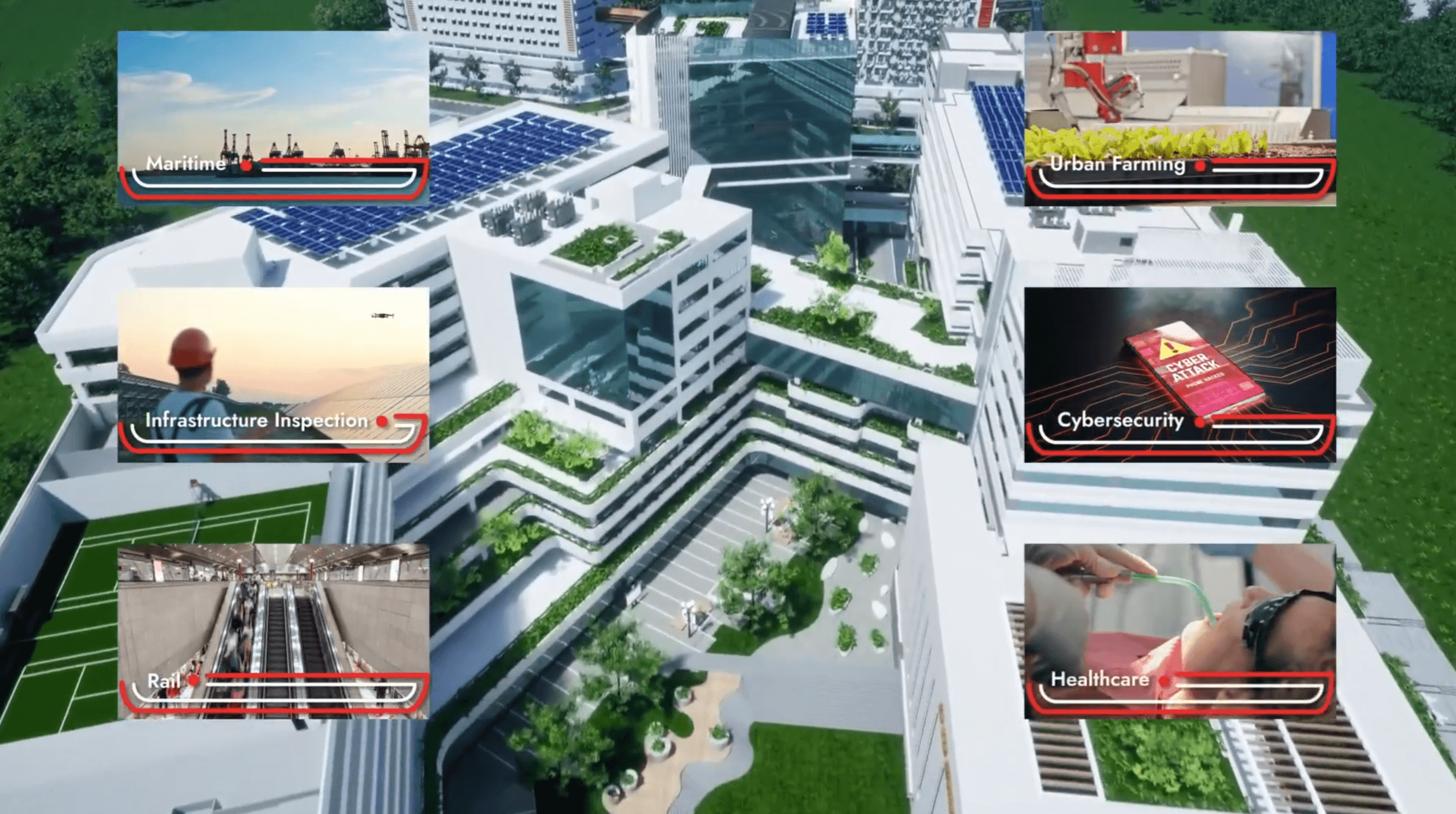
Real 5G use cases on campus: The FCTLab and its partners have explored an array of applications leveraging 5G:
Autonomous Drones & Vehicles:
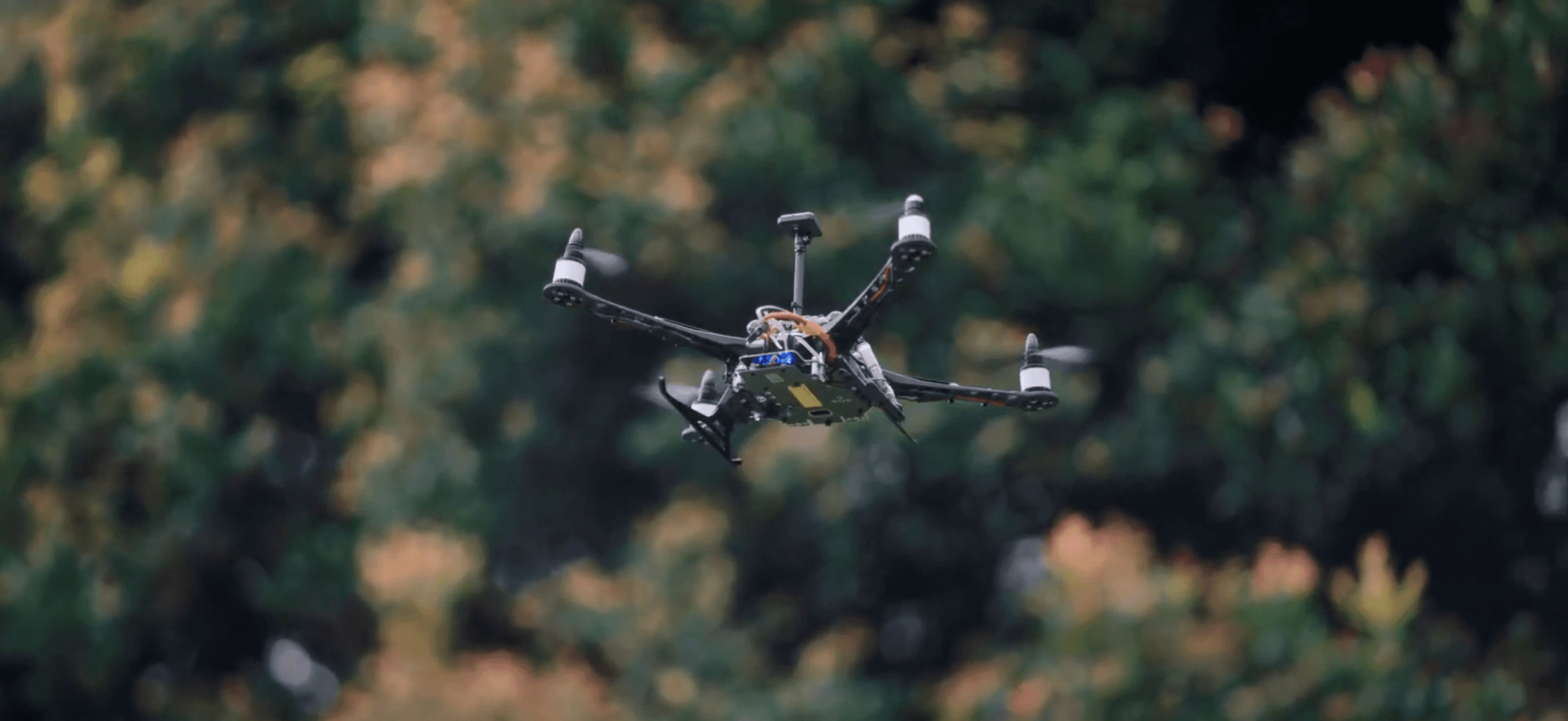
Trials have tested 5G-controlled drones and unmanned vehicles for tasks like surveillance and deliveries, taking advantage of 5G’s low latency for precise remote control.
Robotics and Automation:
From robotic arms to delivery robots, the lab is assessing how 5G can enable real-time coordination and control of robots in environments like campuses or factories. An upcoming trial will even use wheeled delivery robots on campus (the kind seen shuttling meals in malls or restaurants) to showcase autonomous logistics.
AR/VR and Remote Presence:
The lab has worked on augmented and virtual reality use cases – for example, remote training simulations and AR maintenance assistance – where 5G’s high bandwidth and reliability make immersive, real-time visuals possible.

Each project is run in a realistic setting. SIT’s Dover campus now hosts both indoor and outdoor 5G coverage zones dedicated to these trials. An indoor test area (the “playground” lab space) allows controlled experiments, while an outdoor courtyard and driveway zone provides a venue for drones, delivery bots, and even autonomous vehicle tests. This means a company can test a delivery robot driving across campus over a private 5G link, or a team can fly drones in the courtyard on 5G, with full control over network parameters.
Notably, the FCTLab isn’t just showcasing cool demos in isolation – it’s structured to help partners get something practical out of each experiment. Companies are invited to use the testbeds as a service: they can come in with a prototype or idea (at about Technology Readiness Level 4–7) and validate it end-to-end on SIT’s 5G network. They can do proof-of-concept trials, live demonstrations, and end-to-end product validation in a safe environment before going to market.
For example, a start-up developing a 5G-enabled AR training headset could test its device on SIT’s network, fine-tune performance, and prove the concept to investors or customers via a live demo – all without needing to build their own 5G infrastructure or rely on a telco’s busy network.
As Prof. Sun Sumei, head of FCTLab, put it, “With the implementation of 5G, remote work can be done more efficiently, and work environment and safety may be greatly improved”. In other words, the lab is helping uncover how 5G can tangibly improve operations – whether it’s letting port crane operators work safely from afar or enabling robots to handle routine tasks – and making those benefits clear through real pilots.


Portable Private 5G: CloudRAN.AI Powers Agile Testbeds
One key enabler behind SIT’s rapid-fire 5G trials is the technology powering the lab’s network. To support many different experiments, the FCTLab needed a 5G system that is flexible, fast to deploy, and easy to adapt.
This is where CloudRAN.AI, a Singapore-based 5G solutions provider (and Cloudnet.ai subsidiary), comes into play. CloudRAN.AI specializes in pure software-driven private 5G networks that run on standard hardware, making deployment much simpler than traditional telco gear. In fact, CloudRAN’s cloud-native 5G solution runs on off-the-shelf IT servers with no specialized accelerators needed, which greatly simplifies integration and setup.
For a translation lab, this kind of plug-and-play approach is a game changer. CloudRAN.AI supplied SIT with a compact, all-in-one 5G network unit – essentially a portable private 5G system in a box. Unlike a fixed cell tower installation, this unit can be carried and set up anywhere on campus in minutes.
Need an extra 5G coverage zone in the courtyard for a drone test? Simply deploy the portable base station there. Running a demo in an auditorium? The same unit can be wheeled in to provide dedicated 5G coverage for the event.
Lab staff reported that the CloudRAN.AI system is truly “plug-and-play”, with teams able to power up the 5G base unit and get it running within minutes. The device includes everything needed – the radio, core network, and management software – so there’s no complex backend to configure on-site.
Key benefits of CloudRAN.AI’s portable 5G solution include:
Fast Deployment:
The unit can be deployed at a new location on very short notice. Field teams have literally set up the all-in-one 5G network in under 10 minutes and achieved instant high-bandwidth coverage. This agility means the lab can spin up trials on demand, without weeks of planning or installing permanent infrastructure.
Compact & Mobile:
The equipment is compact and easily portable, fitting in a small rack or container. One person can transport it, and it doesn’t require heavy power or cooling. This mobility lets SIT conduct 5G experiments in different buildings or outdoors, then relocate as needed – a huge plus for a dynamic campus environment.
Flexible Coverage (Indoor/Outdoor):
CloudRAN’s unit supports a range of power and antenna options, so it can cover an indoor lab area or an outdoor field. At SIT, it has been used both indoors and in open-air settings to provide reliable 5G signals for robots and drones alike. The ability to quickly adjust coverage – from a single room to an entire courtyard – gives the lab versatility in designing test scenarios.
Software-Defined & Upgradeable:
Being a software-centric solution, features can be updated or reconfigured remotely. The network can scale capacity up or down (adding more radios or slicing the network for multiple uses) with minimal fuss, ensuring it meets the specific needs of each trial. This future-proof architecture means the lab can adopt new 5G advancements (or even transition to 6G down the line) without replacing the whole system.
Integration with Public Networks:
The CloudRAN system can integrate or coexist with existing public cellular networks if needed. For instance, if an experiment needs to hand off to the campus Wi-Fi or a carrier’s 5G, the CloudRAN core can be configured accordingly. This ensures that lab trials mimic real deployment conditions where different networks intersect.
In practice, CloudRAN.AI’s portable private 5G has already proven itself in demanding scenarios. The solution was recently used to live-stream a multi-venue sports tournament in Germany, with portable 5G units beaming HD video from basketball arenas to a central control room.
Broadcast teams on the ground simply popped up the 5G base stations at each venue, instantly creating a high-speed uplink – no fiber cables, no lengthy setup. The system handled continuous high-bandwidth video feeds with ultra-low latency (~5–10 ms), and when the event moved to a new city, the 5G units were moved and redeployed overnight with ease.
This example underscores the robustness and portabilityof the technology. If it can support live drones and cameras chasing marathon runners at 250 km/h or streaming from multiple sports arenas, it can certainly handle a swarm of delivery robots roaming a university campus. CloudRAN.AI’s innovation even earned a GSMA Foundry Excellence Award in 2024 for its “hyper-cell” event networking solution – a testament to how well the design performs in challenging real-world use cases.
For SIT’s FCTLab, having such a flexible private 5G network-in-a-box is invaluable.
“The CloudRAN.AI equipment is very practical – it’s compact, portable and can be quickly deployed,” notes one project lead at the lab. “It’s also very flexible in terms of power and coverage, whether we use it indoor or outdoor.”
This aligns perfectly with the lab’s mission: enabling rapid experimentation without the typical logistical headaches. The lab staff can focus on the application being tested (the drone, robot, or AR app) rather than worrying about configuring complex network hardware. In short, CloudRAN’s plug-and-play 5G lowers the barrier to entry for innovators – you don’t need to be a telco expert to stand up a customized 5G network for your prototype. That accelerates the cycle of innovation, letting teams test, learn, and iterate faster.
From Campus Trials to Industry Transformation
What’s happening at SIT’s translation lab is a microcosm of a broader trend: 5G is moving from buzzword to business tool, one use case at a time. By providing a space to work out the kinks of new applications, labs like FCTLab are helping 5G solutions mature much faster. A drone delivery concept that succeeds in the lab today could become a commercial service in a smart city tomorrow. A robotics company that validates their 5G-controlled AGV (Automated Guided Vehicle) on campus may soon deploy it in factories, confident that it will work as intended. This pipeline from campus to commerce is how 5G’s revolutionary potential will ultimately be realized – through dozens of small, practical breakthroughs in different industries.
At SIT, the impact is already evident. The lab’s trials have informed regulators and enterprises about what works and what doesn’t. Insights gained from the 20+ pilots are shaping best practices for 5G adoption in Singapore’s businesses. For example, early drone experiments highlighted the need for dedicated outdoor 5G coverage slices, which the lab provided and refined. AR/VR trials revealed how edge computing at the campus network could reduce latency for graphics rendering. Each lesson learned is shared with partners, helping to smooth out real-world deployments later on.
Professor Sun Sumei emphasizes that close industry collaboration is key, noting that the lab actively seeks out feedback and “pain points” from companies so they can co-create solutions that truly meet industry needs. This demand-driven approach ensures the research stays relevant to real deployment challenges, from network security to device interoperability.
Looking ahead, SIT’s FCTLab and CloudRAN.AI plan to continue pushing the envelope. Upcoming projects in 2024–2025 will likely tackle even more complex scenarios – think autonomous vehicle testing on campus roads, smart factory testbeds for Industry 4.0, and public safety applications for first responders. Each new use case will benefit from the agile 5G platform the lab has built: a blend of advanced 5G infrastructure and an open, collaborative ethos. The lab is also expanding partnerships (including globally, with universities like Glasgow and others) to share knowledge and results.
Crucially, the success of this case study sends a clear message: organizations don’t have to wait for 5G to “just happen” to them – they can actively create and shape 5G solutions now. By leveraging a private 5G setup like CloudRAN’s, even a small team or university can experiment with cutting-edge wireless tech on their own terms. This accelerates innovation and lowers risk when scaling up. As 5G networks continue to roll out nationwide (Singapore expects full islandwide 5G coverage by 2025 ), the groundwork laid by these testbeds means the country will be ready with home-grown applications that fill those networks with value.
In summary, SIT’s Future Communications Translation Lab exemplifies how to bring 5G from vision to reality. It combines the best of academia (a safe space to experiment and learn) with the urgency of industry (a focus on usable outcomes). Enabled by CloudRAN.AI’s portable 5G technology, the lab has rapidly turned novel ideas – from drone pilots to AR simulations – into working demos under real-world conditions.
This case study highlights a path that others can follow: start small, test often, stay flexible, and partner up. That’s how 5G’s theoretical capabilities become practical, day-to-day tools that transform how we live and work. The future of 5G isn’t something we’ll just watch unfold; in places like SIT, it’s something we’re actively building, one use case at a time.
Frequently Asked Questions (FAQ)
Q1: What is a 5G translation lab?
A 5G translation lab is a facility focused on applied R&D for 5G technologies, bridging the gap between theoretical research and real-world application. Unlike pure research centers, translation labs (such as SIT’s FCTLab) work closely with industry partners to test, develop, and refine 5G use cases in realistic environments. The goal is to “translate” innovative ideas into practical solutions by running pilot projects on a dedicated 5G test network. This allows companies and researchers to see how a 5G-enabled application (like a robot or AR app) performs in practice and to troubleshoot issues before commercial deployment. In short, it’s a sandbox where new 5G applications can go from concept to proof-of-concept, accelerating the path to market.
Q2: Why are 5G testbeds like SIT’s FCTLab important?
5G testbeds provide a safe, controlled space to experiment with advanced 5G features and devices. They are important because deploying a new 5G use case directly on a public network can be risky or impractical. In a testbed, innovators can customize the network (e.g. allocate special spectrum, adjust network slices) to meet their experiment’s needs. Facilities like FCTLab allow for proof-of-concept trials, demos, and validation of 5G solutions without disrupting commercial services. This accelerates innovation – successful trials give companies confidence to invest in full deployments, and unsuccessful ones can fail fast and inexpensively. Testbeds also help identify technical challenges early (such as interference issues or handover glitches) so they can be resolved with the help of experts before scaling up. Overall, these labs are catalysts that speed up 5G adoption by turning ideas into validated solutions.
Q3: What kind of 5G use cases has SIT’s lab worked on?
SIT’s Future Communications Translation Lab has worked on a wide range of 5G use cases reflecting different industry verticals. So far, projects have included:
Autonomous drones and vehicles:
Using 5G to remotely control drones and campus delivery robots in real time.
Robotics and Industry 4.0:
Connecting robots (like robotic arms or AGVs) to a 5G network for instant control and coordination in manufacturing or logistics scenarios.
Augmented/Virtual Reality (AR/VR):
Testing AR applications for remote assistance and VR setups for training simulations, where 5G’s high bandwidth and low latency improve the experience.
Smart campus IoT:
Trials of sensors and smart devices around the campus leveraging 5G for data collection and analysis (e.g. smart energy management or safety monitoring).
By 2024, the lab had facilitated roughly 20 different use-case trials with partners, including prototypes in drones, robotics, and AR/VR domains (with an upcoming focus on delivery robots). Each trial is conducted on the lab’s private 5G networks, allowing fine-tuning of performance and gathering of data under realistic conditions. These examples show how versatile the lab is – one week they might be testing a 5G-enabled healthcare device, the next an autonomous robot or an AR classroom app. It’s all about exploring 5G’s impact across industries.
Q4: How does CloudRAN.AI’s solution support these 5G experiments?
CloudRAN.AI provides the private 5G network infrastructure that makes many of SIT’s experiments possible. In particular, CloudRAN’s solution is an all-in-one, portable 5G network unit that the lab can deploy quickly wherever needed. Think of it as a 5G network in a box: it contains the radio antenna(s), the 5G core network, and all the software to run a standalone 5G network. This setup supports both indoor and outdoor coverage, which is crucial for the lab (they have trials both inside lab spaces and outdoors for drones/vehicles).
The CloudRAN.AI system is cloud-native and software-driven, meaning it runs on standard computer servers and doesn’t require traditional telecom hardware . For the lab, this brings several advantages:
Rapid setup:
The team can set up the 5G network in minutes at a new location, enabling on-demand testing.
Portability:
The compact gear can be moved across campus – today it might be in a classroom for an AR demo, tomorrow in the courtyard for a robot test.
Flexibility:
It’s easy to adjust power and coverage area, or even create multiple isolated network slices for different tests. The lab can simulate various network conditions (from wide-area coverage to dense indoor cells) using the same equipment.
Reliability and performance:
CloudRAN’s tech has delivered high throughput and ultra-low latency in the field , which gives experimenters confidence that network quality won’t be a bottleneck.
In short, CloudRAN.AI’s solution acts as the backbone 5G network for the lab’s activities. Its plug-and-play nature and robust performance allow SIT to focus on experimenting with applications rather than spending weeks building or configuring a network for each new project. It’s a key enabler for the lab’s agility.
Q5: What makes a “private 5G” network different from public 5G?
A private 5G network is a dedicated cellular network intended for use by a specific organization or within a specific location (such as a company campus, factory, or in this case, a university lab). It uses the same technology as public 5G (and often the same equipment), but the network is controlled and owned by the organization rather than a telecom operator. Key differences include:
Dedicated Resources:
In a private 5G setup, the spectrum, radios, and core network are reserved for the private owner’s use. This means devices on the private network don’t compete with the general public for bandwidth, yielding more consistent performance (important for things like industrial robots or HD video streams). For instance, SIT’s lab has its own 100 MHz band allocated for testing, separate from public carriers.
Customization:
Private 5G allows fine-tuned control of network parameters. The network can be configured to specific requirements – e.g. ultra-low latency mode, higher uplink capacity for cameras, or network slicing for different departments . Public 5G networks serve broad consumer needs and can’t easily be customized for one company’s application, whereas private networks are tailored to the use case.
Security & Local Data:
With a private 5G, all data can remain on-site within the organization’s own network, which enhances security and compliance (no data passing through a public carrier’s core). This is attractive for sensitive operations (like defense, healthcare, or R&D labs).
Independence:
A private network continues to function for the organization even if public networks are congested or down. For critical operations, this reliability is a big benefit. It also means experiments in a lab environment won’t be affected by external network traffic – a crucial factor for consistent testing.
In summary, public 5G is like a highway open to everyone, while private 5G is like a reserved track for your own vehicles. Both get you from A to B, but the private road lets you set the speed limit, traffic rules, and who gets to drive on it. That’s why many enterprises and labs opt for private 5G to support specialized applications and innovation trials.
Q6: How can other organizations collaborate with SIT FCTLab or use its facilities?
SIT’s Future Communications Translation Lab is open to collaboration with industry players, research institutes, and even public agencies looking to explore 5G solutions. Companies or teams interested in running a 5G trial can reach out to the FCTLab to propose a project. Typically, the process would involve: outlining the use case or technology you want to test, any special requirements (for example, specific frequency bands or equipment), and the intended outcomes (e.g. proof-of-concept, performance metrics, etc.). The FCTLab team will then work with you to design an experiment using their testbed-as-a-service offering . This could range from short-term demonstrations (a few days setup) to longer pilot projects spanning weeks or months.
Because the lab has both a multi-vendor open RAN testbed and a single-vendor testbed, they can accommodate different types of setups. If your solution involves a particular vendor’s equipment or an open-source approach, the lab likely has the infrastructure to integrate it. SIT also provides consultancy and technical support through its researchers, who can help analyze results and iterate on the solution. To initiate collaboration, interested parties can contact the lab (via the contact info on the SIT FCTLab website or through SIT’s corporate partnerships office). In essence, if you have a promising 5G application or idea that needs real-world testing in Singapore, SIT’s lab offers an accessible pathway to validate and showcase it – complete with a ready 5G network and expert guidance. This collaborative model lowers the barrier for innovation and helps more organizations get involved in the 5G ecosystem.