Case Study
Private 5G for Smart Greenhouse Innovation: CloudRAN.AI Supports TomatoWorld Testbed for Robotics, IoT, and Data-Driven Horticulture in the Netherlands

How CloudRAN.AI Private 5G Supports Connected Greenhouse Automation, Robotic Operations, and Future-Ready Agricultural Innovation
Greenhouse horticulture is entering a new phase of digital transformation. Modern glasshouse operations increasingly depend on robotics, plant-level sensing, machine vision, climate automation, nutrient control, inspection systems, and data-driven production platforms. As these systems become more connected, wireless connectivity becomes part of the production infrastructure itself.
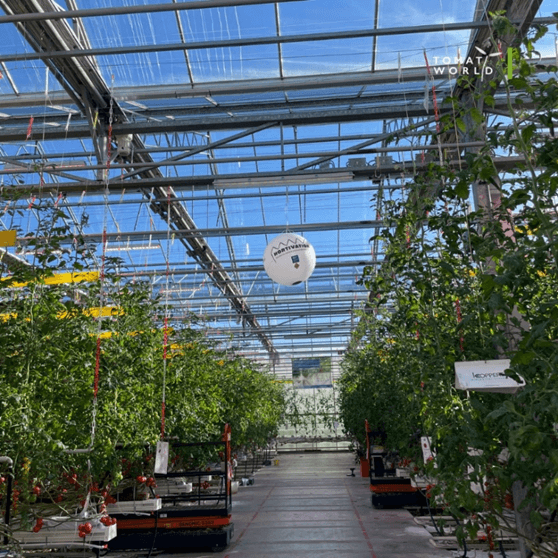
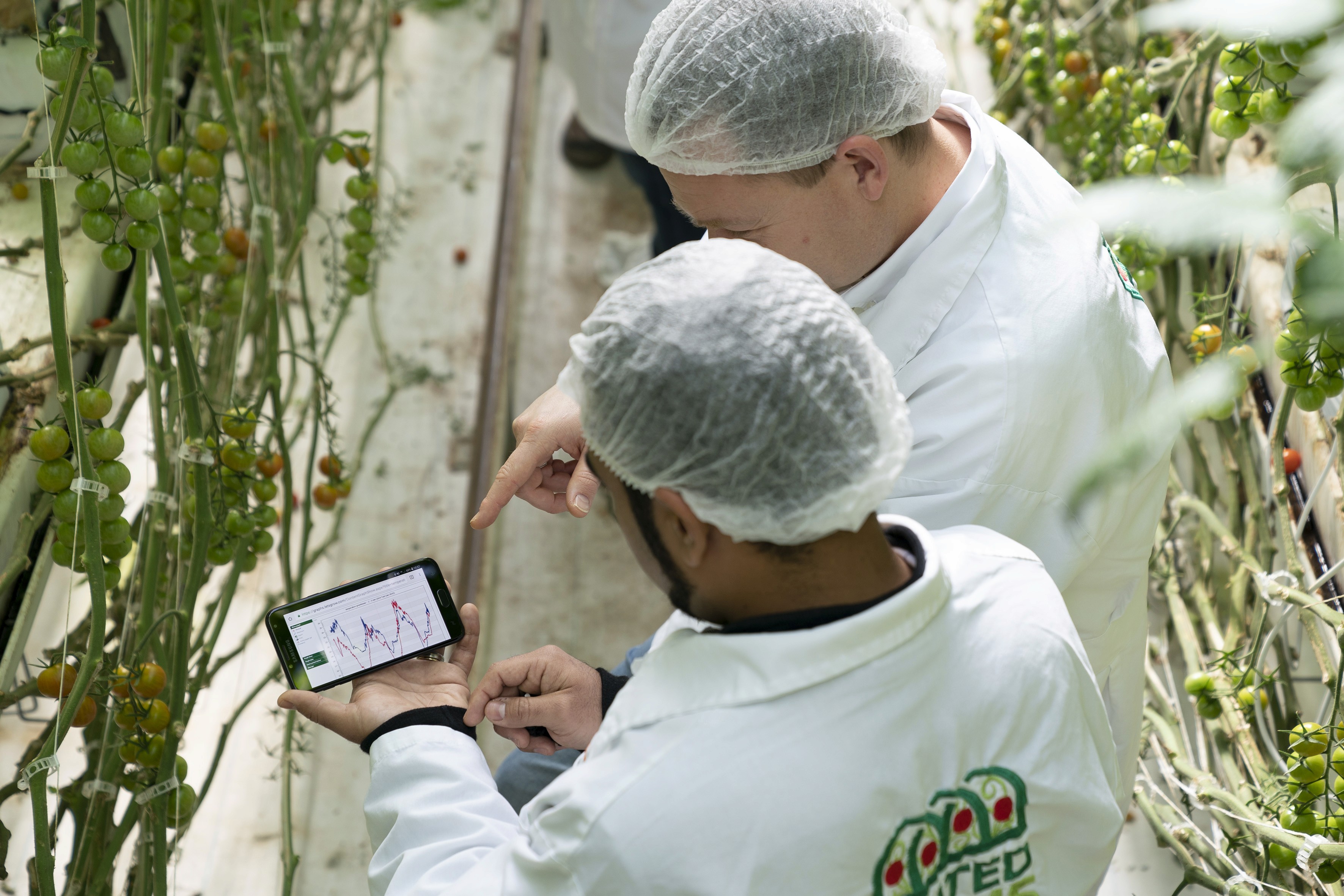
In the Netherlands, one of the world’s leading centers for high-tech horticulture, TomatoWorld serves as a well-known innovation, demonstration, and field-lab environment for advanced greenhouse technologies.
Located in Honselersdijk, Westland, TomatoWorld is positioned within the heart of the Dutch glasshouse cluster and supports technology demonstration, industry collaboration, and future-facing horticultural innovation.
TomatoWorld is recognized as the world’s first public greenhouse facility dedicated to private 5G testing. The site provides a live environment for validating how dedicated wireless networks can support smart greenhouse use cases, including robotics, connected sensors, video inspection, and future high-precision positioning.
CloudRAN.AI, part of the Cloudnet.ai portfolio, delivers private 4G/5G solutions for enterprise and industrial deployments, complementing Cloudnet.ai’s broader focus on AI-powered telecom operations, BSS modernization, and network automation.
CloudRAN.AI is supporting private 5G testbed work for TomatoWorld in the Netherlands using CloudRAN.AI private 5G equipment, including P10 / P440-based deployment components.
The testbed explores how private 5G can support greenhouse automation use cases such as robotic operations, high-reliability wireless coverage, connected sensors, video, and future roadmap capabilities including RedCap and UWB positioning.
The objective is not simply to provide wireless coverage. The goal is to validate a dedicated connectivity layer for smart greenhouse operations where reliability, mobility, low latency, device density, and operational control matter.
Customer / Site Profile
Site: TomatoWorld
Location: Honselersdijk, Westland, Netherlands
Industry: High-tech greenhouse horticulture / smart agriculture
Environment: Public exhibition facility and live greenhouse innovation testbed
Use case focus: Private 5G for greenhouse robotics, connected horticulture, IoT, automation, and future positioning services
Technology model: CloudRAN.AI Private 5G testbed using P10 / P440-based components
Positioning: World’s first public greenhouse facility dedicated to private 5G testing
TomatoWorld combines an exhibition and demonstration role with practical greenhouse innovation. The site includes a public-facing area that introduces visitors to Dutch greenhouse horticulture and a live greenhouse environment that can support testing of advanced agricultural technologies.
This makes the site especially relevant for private 5G validation. It is not a conventional office, campus, or factory. It is a real horticultural environment with glass structures, metal frames, dense vegetation, humidity, operational equipment, and changing RF conditions.
These are exactly the kinds of environments where generic wireless assumptions may not hold.
Why Connectivity Matters in Smart Greenhouses
Greenhouse operations are increasingly software-defined and data-driven. A modern greenhouse may include:
• Climate control systems
• Nutrient and irrigation management
• Plant-growth monitoring
• Autonomous mobile robots
• Harvesting or inspection robots
• Machine vision systems
• HD monitoring cameras
• Environmental sensors
• Crop-health analytics
• Mobile terminals for workers
• Automated logistics equipment
• Edge computing and local analytics platforms
• Centralized greenhouse management systems
Each of these workloads places different requirements on the network.
A sensor network may require massive device density and stable low-power connectivity. A robot may require low-latency and reliable mobility. A video inspection system may require high uplink capacity. A control platform may require secure and predictable data exchange. A future positioning service may require consistent timing, local processing, and integration with operational applications.
This is why smart greenhouse environments need more than best-effort wireless coverage.
They need a network layer that can support different application classes with different reliability, latency, throughput, mobility, and security requirements.
The Greenhouse Connectivity Challenge
Glasshouse environments are difficult wireless environments.
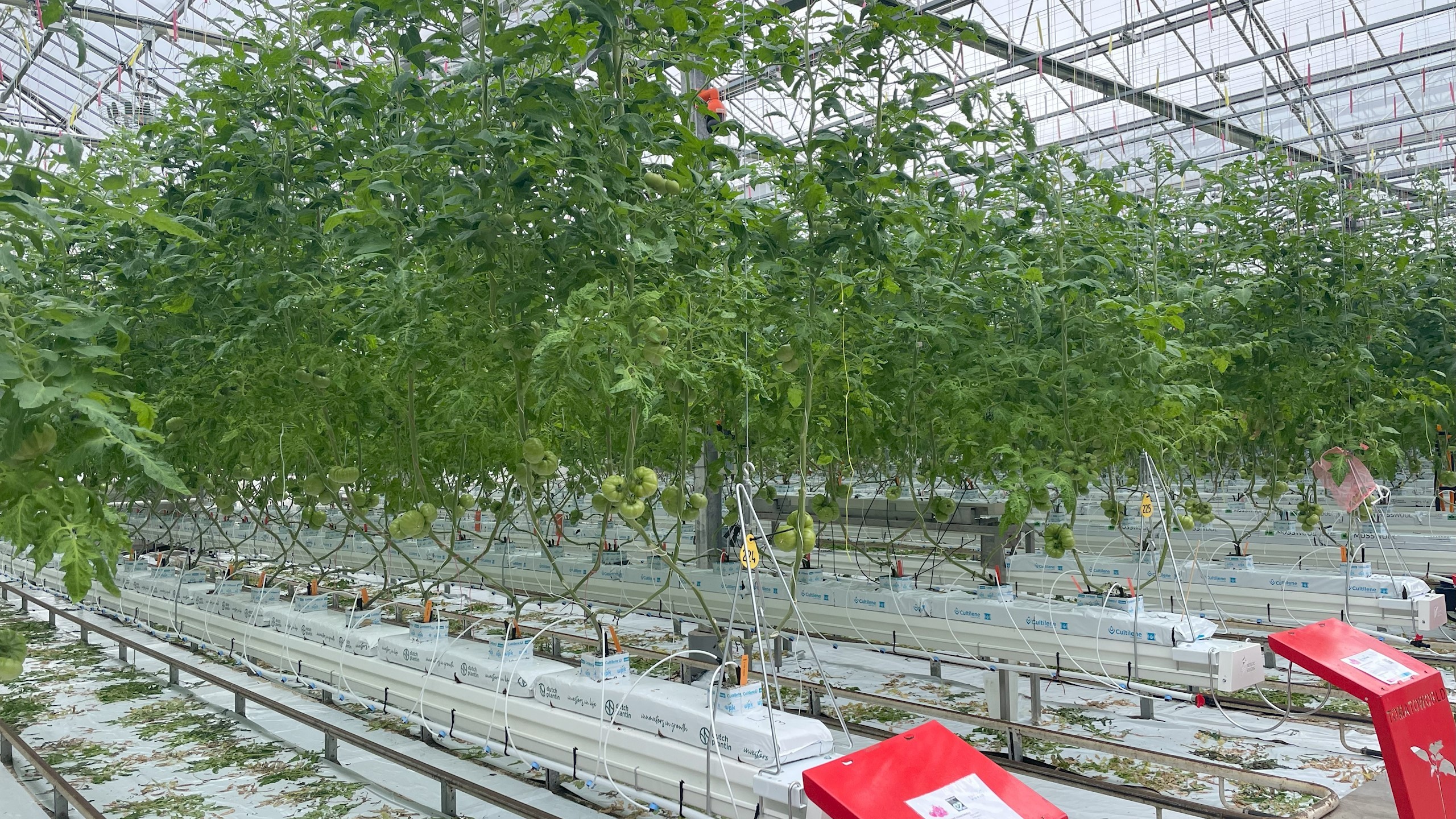
A greenhouse can include metal structural frames, glass surfaces, dense crop rows, irrigation systems, moving carts, robotic equipment, variable humidity, and plant foliage that changes over time.
These elements can affect signal propagation, create reflections, reduce coverage consistency, and make radio behavior less predictable.
Traditional wireless technologies such as Wi-Fi and Bluetooth can be useful for many general applications, but they may struggle in production-oriented greenhouse environments where devices move, uplink demand increases, or connectivity must remain stable across a dense and reflective site.
Common greenhouse connectivity challenges include:
• Metal frames and glass structures affecting RF propagation
• Dense plant foliage creating signal blockage and attenuation
• Changing crop density across growth cycles
• Mobile robots moving through rows and corridors
• High uplink demand from cameras and inspection systems
• Many concurrent sensors and connected devices
• Need for stable coverage across indoor and semi-industrial spaces
• Requirement for secure separation between operational systems and visitor / enterprise networks
• Need for future integration with positioning and automation platforms
For a smart greenhouse testbed, the network must be able to support experimentation without becoming the bottleneck.
Why Private 5G Is Relevant
Private 5G provides a dedicated wireless architecture for environments that require more control than public networks or best-effort Wi-Fi can provide.
For greenhouse horticulture, private 5G is relevant because it can combine:
• Dedicated site-level coverage
• SIM/eSIM-based secure access
• Mobility support for robots and moving equipment
• Better support for uplink-heavy workloads
• QoS control for different application classes
• Integration with edge computing and local breakout
• Scalable device connectivity
• Isolation from public network congestion
• Stronger operational control for production environments
In TomatoWorld’s case, private 5G can be used as a testbed foundation for validating connected greenhouse use cases before wider commercialization or production deployment.
The Private 5G Testbed
CloudRAN.AI is supporting private 5G testbed work for TomatoWorld in the Netherlands using P10 / P440-based deployment components.
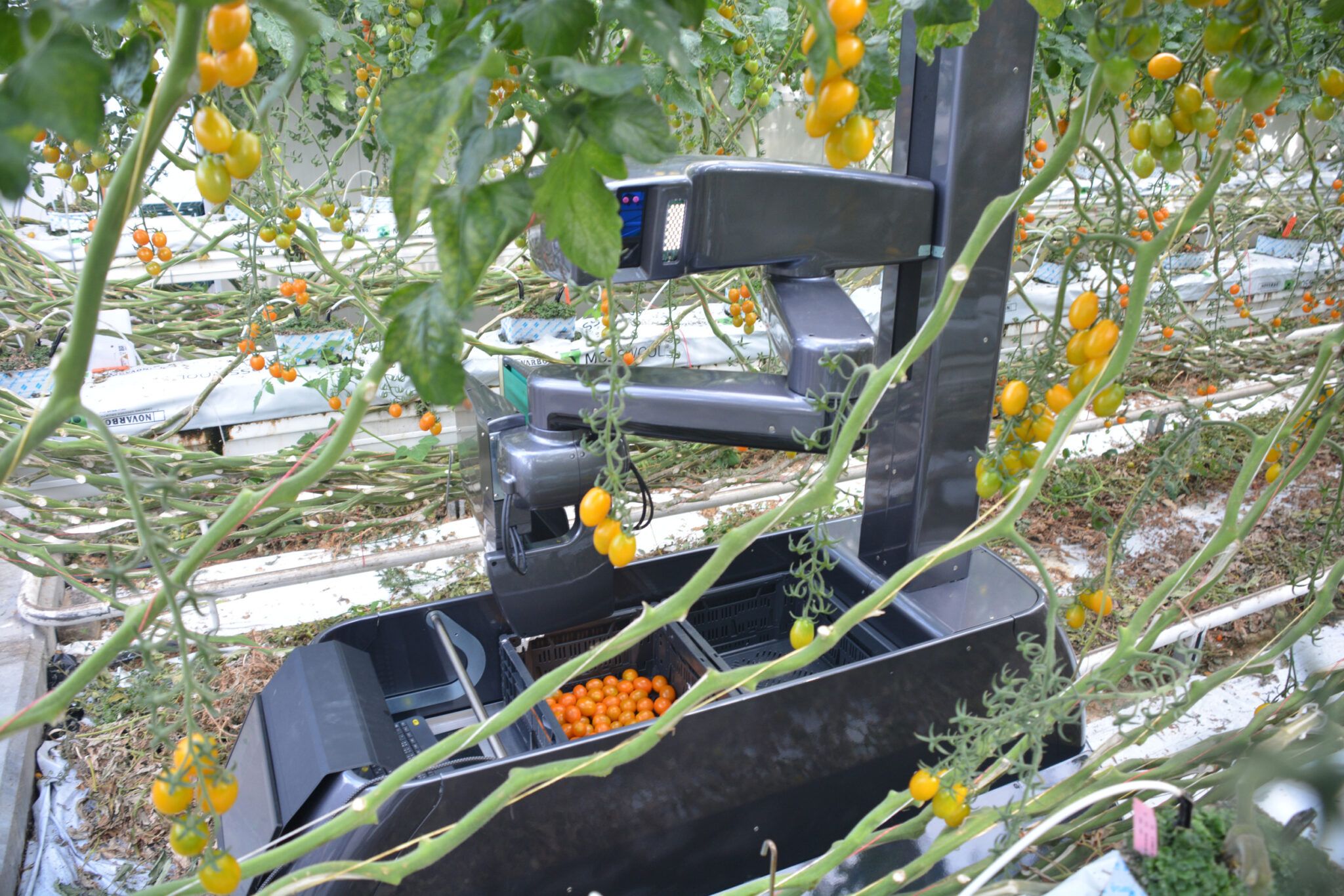
The testbed is designed to support private 5G validation in a live greenhouse innovation environment. The goal is to explore how private 5G can support current and future horticulture workloads, including robotics, connected sensors, video, and high-precision operational use cases.
The testbed is especially relevant because TomatoWorld is not only a showcase site. It is also a practical environment for testing how wireless technologies behave under real greenhouse conditions.
Key testbed objectives include:
• Validate private 5G performance in glasshouse conditions
• Support robotic greenhouse operations
• Explore reliable connectivity for mobile and fixed devices
• Enable future RedCap-based IoT device scenarios
• Prepare for future high-precision positioning with UWB support
• Support agricultural technology demonstrations for visitors, growers, operators, integrators, and partners
• Provide a foundation for smart agriculture use cases that require reliable wireless connectivity
CloudRAN.AI Solution Components
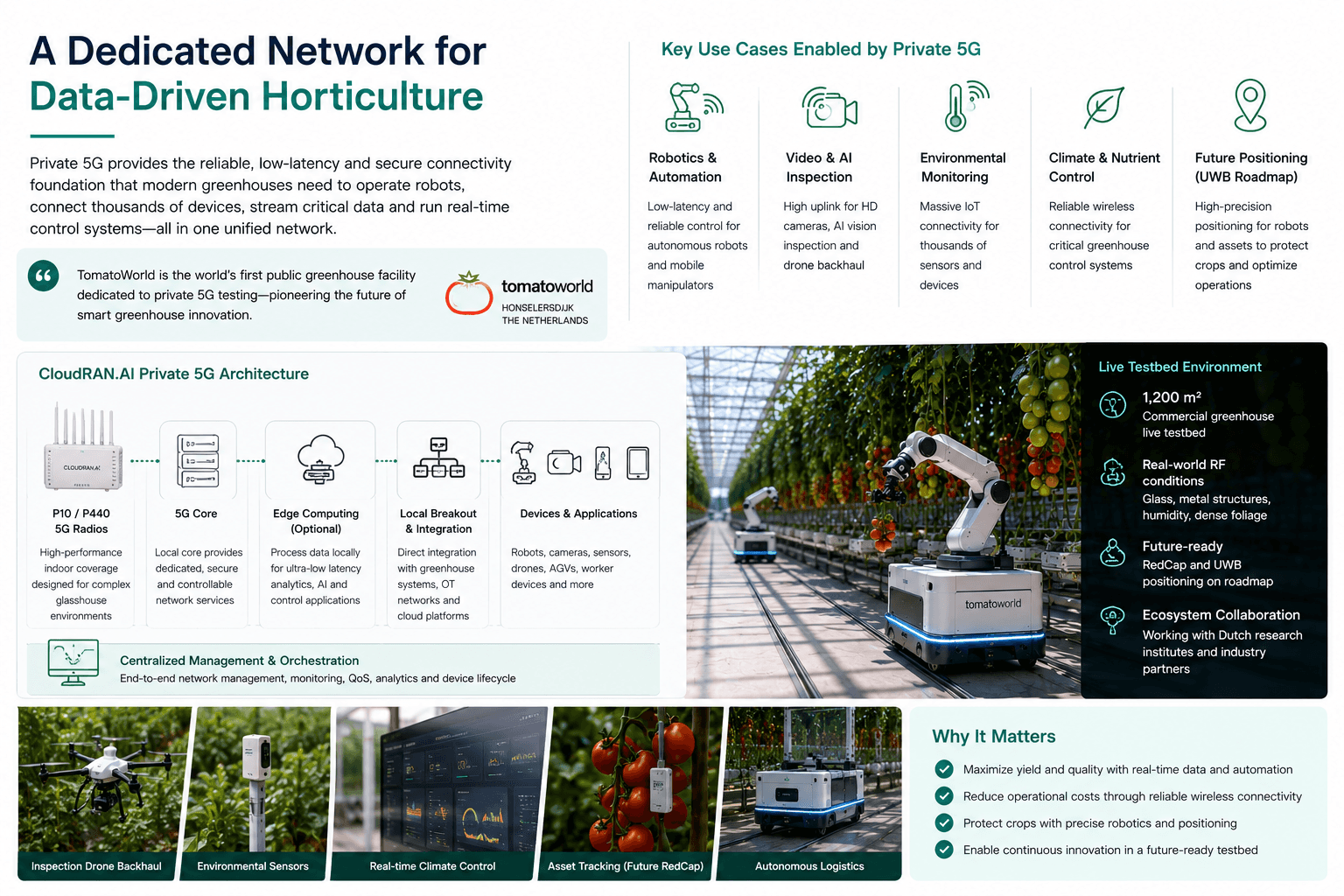
The CloudRAN.AI private 5G solution is designed to provide a compact, deployable, and enterprise-ready private network layer for industrial and enterprise environments.
For the TomatoWorld testbed, the solution is based on CloudRAN.AI private 5G deployment components, including P10 / P440-based equipment, with the potential to support broader private 5G architecture elements such as:
• Private 5G RAN
• 5G core integration
• Local traffic breakout
• Device and terminal connectivity
• Operational management
• Edge-ready application integration
• Future RedCap device scenarios
• Future integration with UWB positioning services
This architecture gives greenhouse operators and technology partners a controlled environment to test how private 5G can support real agricultural workloads.
Use Cases Enabled
Greenhouse Robotics
Robots are one of the most important private 5G use cases in high-tech horticulture.
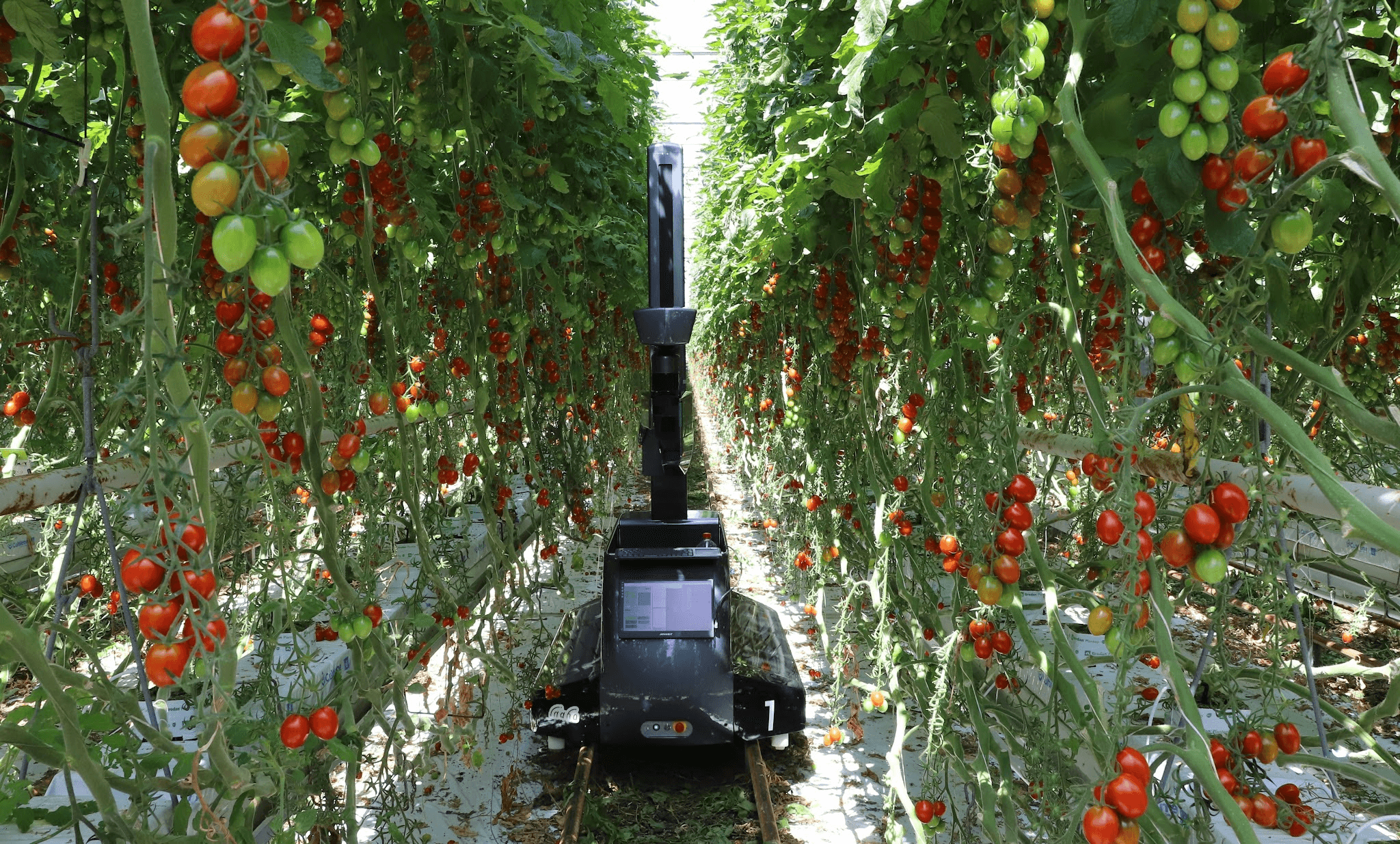
Greenhouse robots may support harvesting, crop inspection, transport, scouting, monitoring, or manipulation tasks. These systems often need stable wireless connectivity while moving through narrow rows, changing positions, and operating near crops, workers, structures, and equipment.
Private 5G can support robotic operations by providing:
• Reliable mobility across the greenhouse
• Low-latency communication for responsive operation
• Secure connection to local control systems
• Uplink capacity for robot cameras and sensor data
• Better handover behavior than many Wi-Fi-based deployments
• Integration with edge computing for local decision-making
For TomatoWorld, private 5G helps create a realistic environment for testing how robots can operate in connected greenhouse conditions.
Video Inspection and Machine Vision
Greenhouse operations increasingly rely on video and machine vision for crop monitoring, growth assessment, disease detection, yield estimation, quality control, and robotic navigation.
These applications are often uplink-heavy. Cameras and inspection systems may need to send video streams from the greenhouse floor to local servers, cloud platforms, or edge analytics systems.
Private 5G can support video and machine vision workloads through:
• High uplink capacity
• Stable wireless connectivity for mobile or fixed cameras
• Local breakout to keep traffic close to the greenhouse
• Secure traffic handling for operational video data
• QoS profiles for bandwidth-intensive workloads
This is especially important in environments where video inspection traffic must not interfere with control or sensor traffic.
Environmental Sensor Connectivity
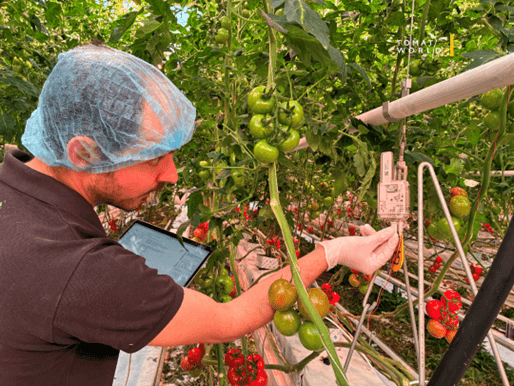
Greenhouse horticulture depends on precise environmental control. Sensors may monitor temperature, humidity, CO₂, light intensity, substrate conditions, irrigation status, nutrient levels, plant health, and equipment performance.
A smart greenhouse may contain many connected sensors operating at different reporting intervals.
Private 5G can support greenhouse sensor networks by providing:
• Scalable device connectivity
• Secure network access
• Traffic segmentation between sensor, video, robot, and enterprise workloads
• Integration with greenhouse control platforms
• Future readiness for RedCap-based IoT devices
RedCap support is especially relevant for future smart agriculture deployments. Reduced Capability 5G can help bridge the gap between full-performance 5G devices and lower-power IoT endpoints, making it useful for industrial and agricultural sensors, trackers, gateways, and mid-range connected devices.
CloudRAN.AI’s radio and terminal roadmap includes RedCap support, with future availability expected to expand the range of 5G device types suitable for smart agriculture environments.
Centralized Climate and Nutrient Control
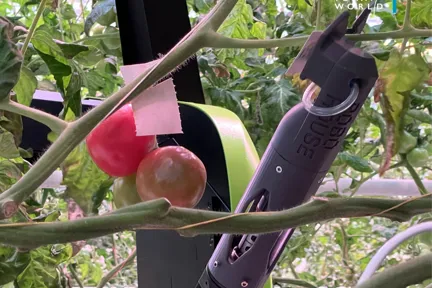
Greenhouse production depends on stable and accurate control of climate and nutrient systems.
These systems may include ventilation, heating, lighting, irrigation, fertigation, CO₂ dosing, and environmental feedback loops. Connectivity is not the only factor in these systems, but reliable data exchange is essential for monitoring, control, and optimization.
Private 5G can provide a secure wireless layer for selected greenhouse control and monitoring workflows, especially where wired connectivity is difficult, mobile equipment is involved, or new sensing points need to be added flexibly.
Relevant capabilities include:
• Secure device connectivity
• Local breakout for low-latency traffic
• Integration with control platforms
• Stable coverage across operational zones
• Traffic separation for critical and non-critical workloads
High-Precision Positioning for Robots and Mobile Assets
Accurate positioning is important in greenhouse robotics. Robots must navigate dense crop rows, avoid damaging plants, operate safely around people and equipment, and align with specific production tasks.
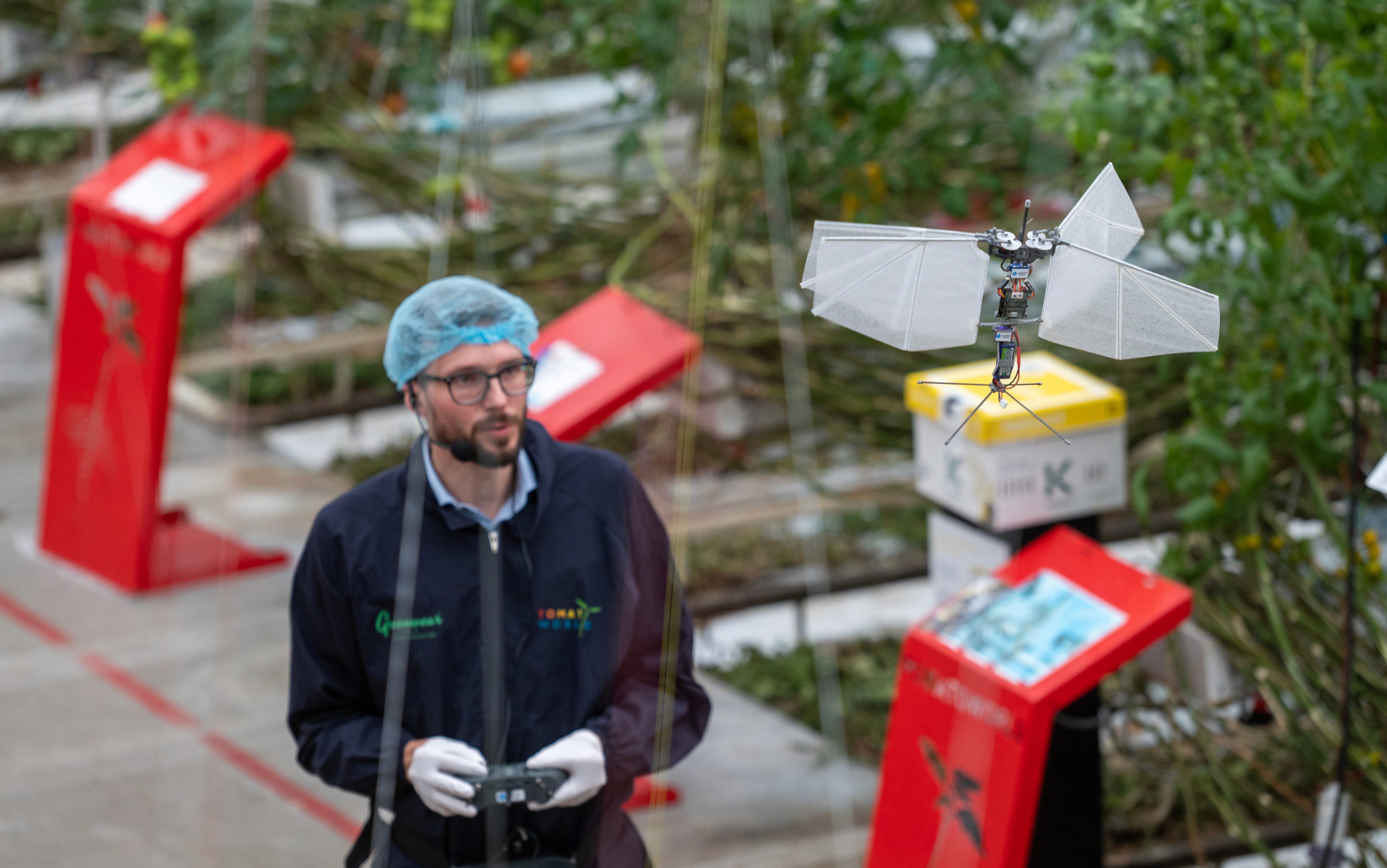
As part of CloudRAN.AI’s future roadmap, UWB positioning service integration can be adopted to support high-precision positioning for robots and mobile assets.
This is important because greenhouse operations often require more than approximate location. Robotic systems may need precise positioning to:
• Navigate crop rows
• Approach plants without damage
• Coordinate with picking or inspection tasks
• Avoid collisions
• Support digital mapping of greenhouse zones
• Improve operational safety and repeatability
By combining private 5G connectivity with future UWB-based positioning, the greenhouse network can evolve from a connectivity layer into a more complete operational infrastructure for robotic agriculture.
Public Demonstration and Ecosystem Collaboration
TomatoWorld also has a public exhibition and demonstration function. This makes the private 5G testbed valuable not only for technical validation, but also for ecosystem education.
Visitors such as growers, telecom operators, system integrators, technology vendors, universities, and research organizations can observe how advanced greenhouse technologies may work in practice.
Private 5G at a site like TomatoWorld can help demonstrate:
• How dedicated wireless networks support smart agriculture
• How robotics and greenhouse automation depend on reliable connectivity
• How telecom and agriculture ecosystems can collaborate
• How private 5G can move from industrial theory into live testbed environments
• How future device types such as RedCap terminals may fit into agriculture
This makes the testbed strategically valuable for both CloudRAN.AI and the wider private 5G ecosystem.
Technical Architecture Considerations
A private 5G greenhouse deployment must consider several architecture factors.
Radio Coverage Planning
Greenhouse radio planning must account for:
• Glasshouse structure
• Metal frames
• Dense crop rows
• Plant growth cycles
• Aisle layout
• Robot paths
• Camera placement
• Sensor zones
• Visitor areas
• Interference and reflection zones
• Outdoor-to-indoor transitions where relevant
The goal is to create stable coverage across areas where robots, sensors, cameras, and mobile terminals operate.
Local Breakout and Edge Processing
Many greenhouse workloads benefit from local traffic handling.
Robot control, video inspection, machine vision, and greenhouse analytics may require data to remain close to the site. Local breakout can reduce unnecessary backhaul, improve responsiveness, and support on-site applications.
For smart agriculture, edge processing can support:
• Video analytics
• Robot navigation support
• Crop-health analysis
• Local dashboards
• Sensor data aggregation
• Greenhouse control integration
• AI-assisted inspection workflows
QoS and Workload Separation
A greenhouse testbed may run multiple workloads at the same time. These workloads should not all be treated equally.
For example:
• Robot control traffic may require low latency and reliability
• Video inspection may require high uplink capacity
• Sensor traffic may require scalable low-bandwidth connectivity
• Visitor or demonstration traffic may require separate access
• Greenhouse management traffic may require secure integration with control systems
Private 5G can support differentiated treatment through QoS profiles and network configuration, helping prevent one workload from degrading another.
Device and Terminal Ecosystem
Smart greenhouse private 5G depends on more than the network. It also depends on the device ecosystem.
Relevant device categories include:
• 5G routers and CPEs
• Robot terminals
• Camera terminals
• Industrial tablets
• Sensor gateways
• RedCap terminals in future scenarios
• Positioning anchors and tags for UWB-based location services
The TomatoWorld testbed provides a practical environment for validating how these device categories can work together.
Future RedCap Support
RedCap is a key future feature for agricultural IoT.
Many agricultural devices do not need full enhanced mobile broadband performance, but they need more capability than very low-power narrowband devices.
RedCap can support mid-range IoT use cases where cost, power consumption, coverage, and reliable connectivity all matter.
Potential RedCap-enabled greenhouse use cases include:
• Environmental sensors
• Asset trackers
• Mobile terminals
• Lightweight cameras
• Wearables
• Connected tools
• Agricultural gateways
• Monitoring devices
CloudRAN.AI is working on RedCap support through radio and terminal capabilities, creating a roadmap for future 5G IoT scenarios in environments such as smart agriculture.
Future UWB Positioning Integration
Private 5G provides the connectivity layer, while UWB can provide high-precision positioning.
For greenhouse robotics, this combination can be especially valuable. Private 5G can connect robots, devices, and applications, while UWB can support centimeter-level positioning use cases where accuracy is critical.
Future CloudRAN.AI UWB positioning service adoption can help support:
• Robot navigation
• Crop-row positioning
• Asset tracking
• Safety zones
• Digital greenhouse mapping
• Automated workflow coordination
This creates a pathway toward integrated connectivity and positioning for advanced greenhouse automation.
Expected Benefits
The TomatoWorld private 5G testbed can support several strategic and operational benefits.
Reliable Greenhouse Connectivity
Private 5G provides a dedicated network layer designed for operational environments where reliability matters. This is important in greenhouses where crop production, robotics, and monitoring systems may depend on stable connectivity.
Better Support for Mobile Robots
Private 5G can support robot mobility across greenhouse zones more effectively than many best-effort wireless deployments, especially where coverage, handover, and uplink performance are important.
High-Capacity Data Transmission
Video inspection, HD monitoring, and machine vision require uplink capacity. Private 5G can support high-volume data transmission from cameras, robots, and inspection systems.
Scalable IoT Foundation
As greenhouse sensor density increases, the network must support more connected devices. Private 5G, together with future RedCap support, provides a pathway for scalable agricultural IoT connectivity.
Operational Control and Security
Private 5G gives the site greater control over network access, traffic handling, device connectivity, and workload separation. This is important for operational systems that should not depend on public or uncontrolled networks.
Future-Ready Robotics and Positioning
With future UWB positioning service adoption, the network environment can support more accurate robotic movement, asset tracking, and location-aware greenhouse workflows.
Demonstration Value for the Ecosystem
TomatoWorld’s role as an exhibition and innovation environment makes the private 5G testbed useful for demonstrating smart agriculture connectivity to growers, partners, telecom operators, universities, and industrial technology companies.
Strategic Value for CloudRAN.AI
The TomatoWorld testbed demonstrates how CloudRAN.AI Private 5G can support a new class of enterprise and industrial environments beyond traditional factories, mines, campuses, and ports.
Smart agriculture has many of the same connectivity requirements found in other industrial environments:
• Reliability
• Mobility
• Uplink performance
• Device density
• Operational control
• Edge integration
• Automation support
• Future positioning requirements
But greenhouse horticulture also introduces unique RF and operational challenges. This makes it a strong vertical for validating the flexibility of private 5G.
For CloudRAN.AI, the TomatoWorld project supports several strategic messages:
• Private 5G can support advanced agriculture, not only traditional industry
• Greenhouse robotics requires reliable, mobile, low-latency connectivity
• Private 5G can become a foundation for data-driven horticulture
• RedCap can expand the future 5G device ecosystem for agricultural IoT
• UWB positioning can complement private 5G for robot accuracy and crop protection
• Testbeds like TomatoWorld help move private 5G from concept to practical deployment
CloudRAN.AI Product Fit
CloudRAN.AI’s private 5G portfolio is designed for enterprise and industrial deployments where performance, simplicity, and flexibility matter.
For smart greenhouse environments, relevant CloudRAN.AI capabilities include:
• Private 5G RAN
• 5G core integration
• Compact deployment model
• P10 / P440-based testbed support
• CPE and terminal ecosystem
• Edge-ready architecture
• Local breakout support
• Cloud-based operation and management
• Future RedCap support
• Future UWB positioning service integration
• Support for robotics, video, sensors, and industrial IoT workloads
Together, these capabilities allow CloudRAN.AI to support greenhouse testbeds and future agricultural deployments that require more than generic connectivity.
Conclusion
TomatoWorld represents an important smart agriculture testbed for private 5G innovation in the Netherlands.
By supporting the site with CloudRAN.AI private 5G technology, the project explores how dedicated wireless networks can support greenhouse robotics, connected sensors, video inspection, centralized control, and future high-precision positioning.
The deployment is especially relevant because greenhouse environments are challenging for wireless systems. Glass structures, metal frames, dense crops, mobile robots, and high-volume data flows create demanding conditions for connectivity.
Private 5G provides a way to address these challenges with a dedicated, secure, scalable, and operationally controlled network layer.
For TomatoWorld, the testbed supports innovation in data-driven horticulture. For CloudRAN.AI, part of the Cloudnet.ai portfolio, it demonstrates how private 5G can extend into advanced agriculture while supporting Cloudnet.ai’s broader mission of enabling AI-powered, connected, and automation-ready digital operations.
As smart agriculture continues to evolve, private 5G, RedCap, edge computing, robotics, and precision positioning will become increasingly important building blocks for sustainable, automated, and high-efficiency food production.