Case Study
Private Wireless for Remote Industrial and Mobile Connectivity: Small Cell Deployment Across Rural, Mobile, and Indoor Use Cases in a Remote Rural Market

Extending Mobile Coverage Beyond the Macro Network: CloudRAN.AI Flare125 Small Cells for Remote, Indoor, and Mobile Connectivity Use Cases
Remote industrial environments often face a difficult connectivity problem: the sites that need reliable communications the most are frequently the hardest places to serve.
Across rural production sites, aquaculture facilities, road construction projects, mobile assets, warehouses, retail sites, temporary field operations, and remote tourism infrastructure, teams may need stable wireless connectivity for people, equipment, monitoring systems, sensors, mobile devices, positioning, video, operational data, and safety communications.
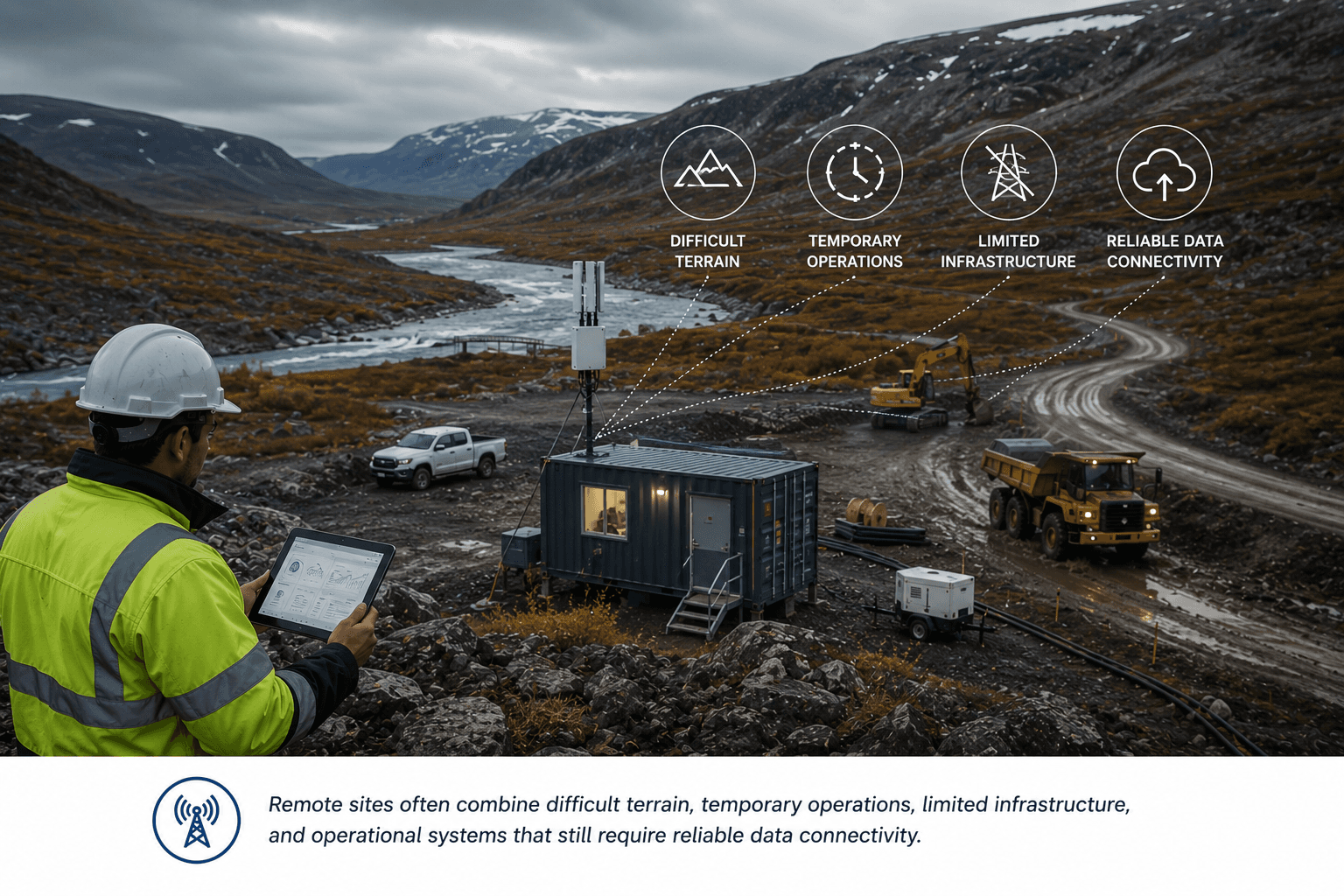
But these environments are often located far from dense network infrastructure. They may have limited power, no fixed buildings, no fiber, difficult terrain, harsh weather, metallic structures, indoor coverage issues, or mobile operations that move in and out of existing coverage areas.
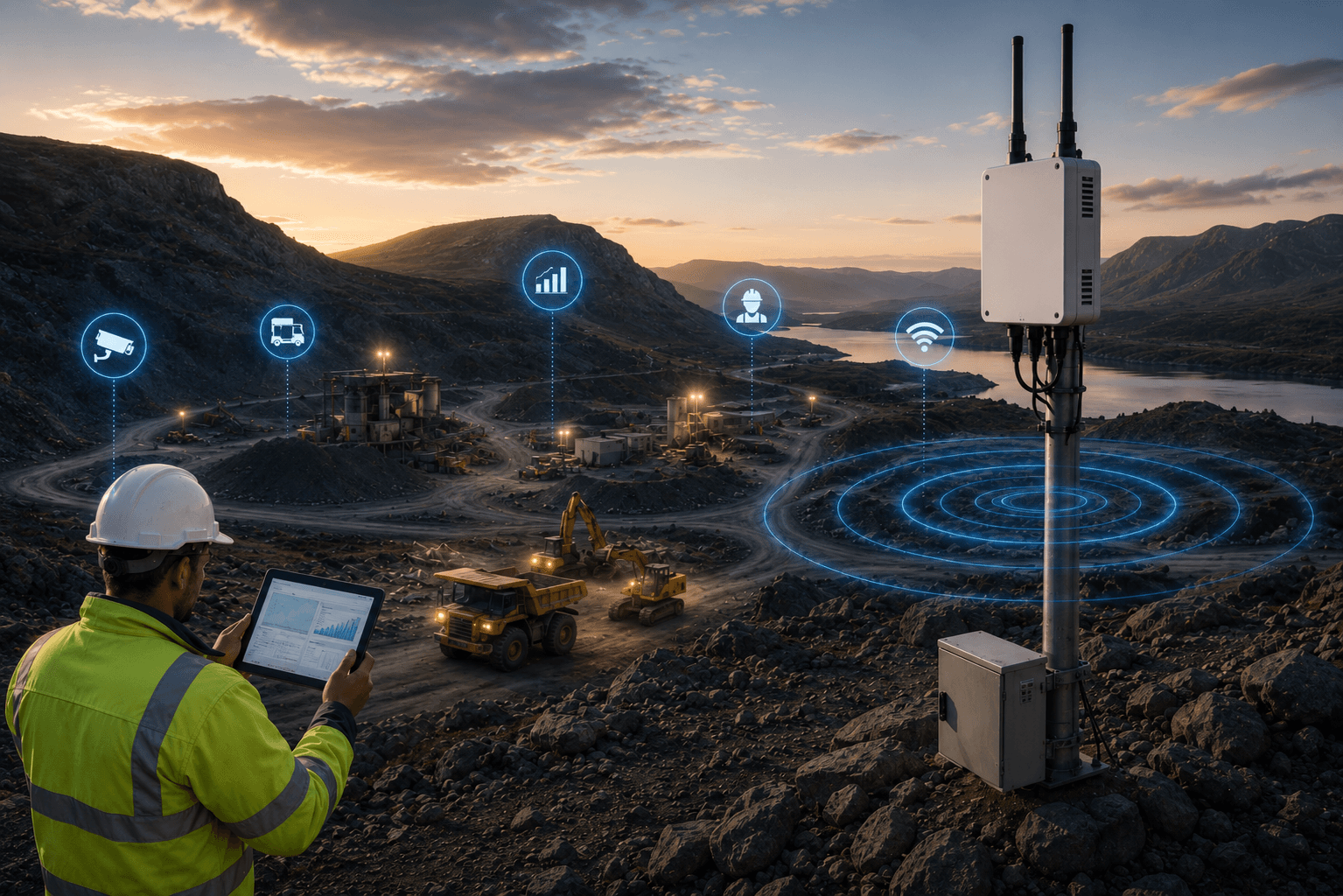
In a remote rural market, CloudRAN.AI (part of the Cloudnet.ai portfolio) small-cell technology has been deployed across multiple remote and industrial scenarios to support mobile connectivity where conventional coverage models are difficult, expensive, or too slow to deploy.
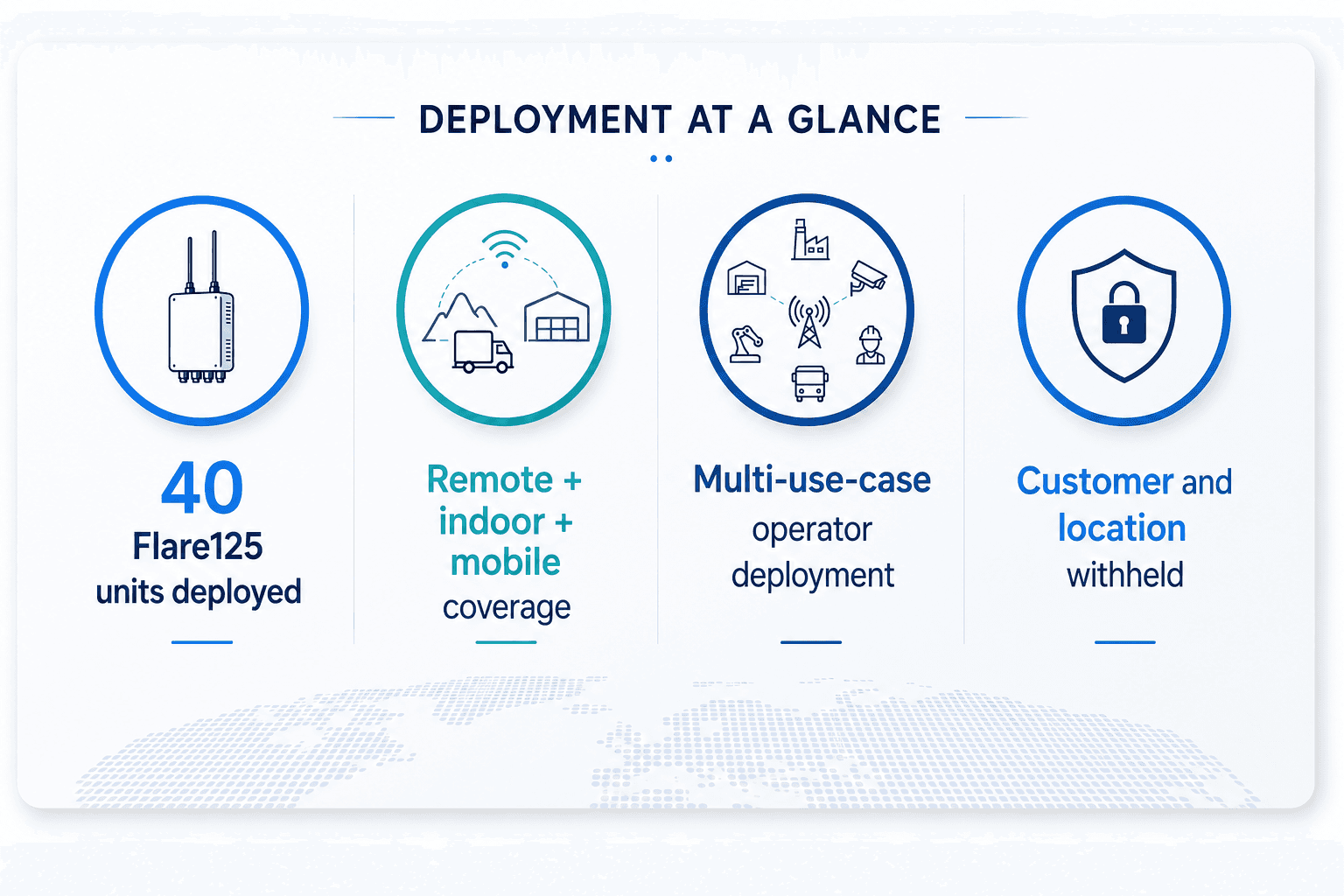
The deployment includes 40 units of Flare125 base stations, with reported strong performance across a range of use cases. The deployment demonstrates how compact small cells can be used to extend reliable mobile service into areas such as rural industrial sites, seafood and aquaculture operations, mobile field vehicles, road construction equipment, warehouse environments, retail spaces, rally / motorsport telemetry, and remote geothermal tourism facilities.
For confidentiality reasons, the customer name and deployment location are not disclosed in this version. The focus is on the technical scenarios, service requirements, deployment model, and operational value.
Customer / Deployment Profile
Customer type: Telecom operator / service provider
Region: Remote rural market
Deployment type: Rural, industrial, mobile, and indoor small-cell connectivity
Technology: CloudRAN.AI Flare125 small cells
Scale: 40 Flare125 base stations deployed
Use-case categories: Rural industrial connectivity, aquaculture, field operations, mobile coverage, construction equipment, warehouse automation, retail indoor coverage, rally telemetry, tourism infrastructure, and remote-site communications
The deployment supports multiple operational scenarios where reliable mobile connectivity is needed outside traditional high-density urban coverage zones.
This is important because rural and industrial connectivity cannot always be solved with macro coverage alone. In many cases, the challenge is local: a building has poor indoor signal, a worksite has no nearby infrastructure, a vehicle moves through coverage gaps, or a remote facility needs reliable service before permanent network infrastructure is available.
CloudRAN.AI small cells provide a flexible way to extend mobile connectivity close to where the service is needed.
Why Remote Industrial Connectivity Is Difficult
Remote and industrial sites often create coverage gaps for several reasons.
First, the economics of macro network coverage can be difficult in low-density areas. A rural industrial site, remote fish farm, road construction zone, or tourism facility may be operationally important but not large enough to justify traditional macro infrastructure by itself.
Second, the physical environment can be challenging. Industrial buildings, warehouses, seafood facilities, metal structures, thick walls, vehicles, machinery, and terrain can block or weaken mobile signals.
Third, the connectivity requirement is often specific and operational. The goal is not only to provide general mobile phone service. The site may need connectivity for equipment telemetry, GPS correction data, worker communications, robot control, video monitoring, access systems, payment devices, or vehicle data transmission.
Fourth, many sites are temporary or semi-mobile. Construction projects, road-building equipment, school buses, rally cars, mobile work crews, and temporary operations may need connectivity that can move or be deployed quickly.
This creates a strong fit for small-cell deployment models.
Instead of relying only on wide-area macro coverage, operators can use compact cells to provide targeted coverage in the exact area where connectivity is required.
The Role of CloudRAN.AI Small Cells
CloudRAN.AI small cells are designed to support flexible mobile coverage across enterprise, industrial, rural, and operator-led deployment scenarios.
In this deployment, Flare125 base stations were used to extend mobile service across multiple customer and operational environments.
The value of small cells in this context is practical:
• They can be deployed close to the coverage gap
• They can support targeted indoor or outdoor coverage
• They can serve remote sites where macro coverage is insufficient
• They can support operational devices and worker connectivity
• They can be integrated into service-provider network architecture
• They can be combined with different backhaul options depending on site conditions
• They can support use cases where permanent macro infrastructure is not practical
This makes small cells especially useful for rural industrial coverage, remote work areas, and specialized enterprise applications.
Deployment Architecture
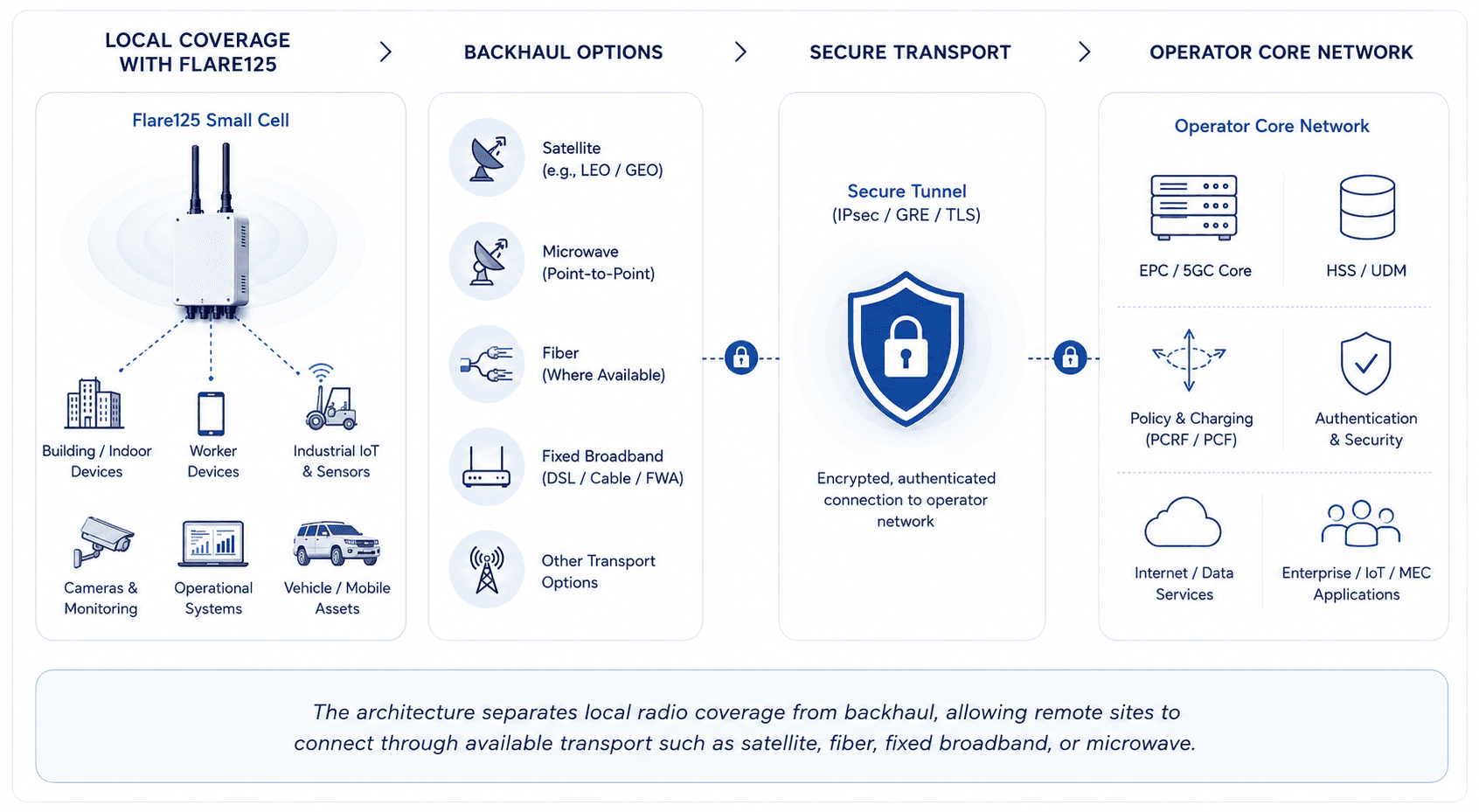
The available technical material shows a small-cell architecture designed to extend mobile service into difficult coverage environments.
A simplified architecture includes:
• CloudRAN.AI small cell at the remote or indoor site
• Local devices connecting over LTE / mobile access
• Backhaul through available transport such as fiber, fixed broadband, microwave, or satellite depending on the site
• Secure connection into the operator core network
• Integration with mobile network services for end-user access
• Local coverage for devices, workers, vehicles, equipment, or operational systems
One illustrated scenario shows a small cell connected via Starlink backhaul to reach the operator mobile core. This is especially relevant for remote or mobile use cases where terrestrial backhaul is unavailable or difficult to deploy.
This model is powerful because it separates the local radio coverage problem from the backhaul problem.
The small cell provides local mobile coverage. The backhaul link carries traffic from the site back into the operator network. Depending on the location, this backhaul could be fiber, fixed broadband, microwave, satellite, or another available transport path.
For remote industrial sites, this flexibility is essential.
Key Deployment Scenarios
Rural Seafood / Aquaculture Site Connectivity
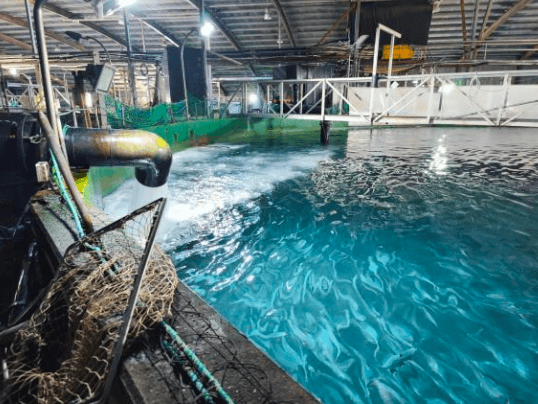
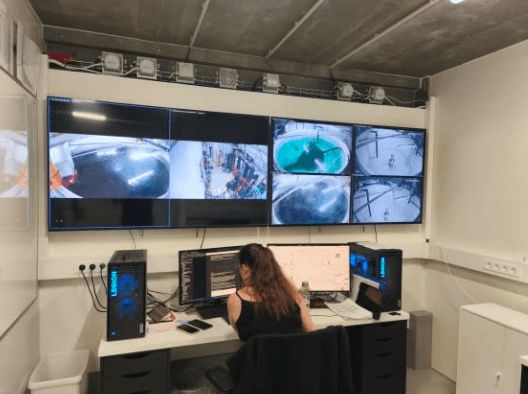
One of the highlighted use cases involves a rural land-based salmon farm operated by a major seafood company. The deployment used five Flare125 units to provide coverage across the site, with one cell deployed in each building at the farm.
Aquaculture and seafood production environments have demanding connectivity needs.
These sites may require:
• Video monitoring of tanks and production areas
• Sensor data from water systems
• Environmental monitoring
• Worker communications
• Operational dashboards
• Safety systems
• Mobile device connectivity
• Connectivity across multiple buildings
• Integration with production and monitoring systems
Indoor aquaculture facilities can also be challenging RF environments. They may include concrete structures, metal frames, water tanks, wet environments, pumps, electrical equipment, and operational rooms where macro signal may not penetrate reliably.
By deploying small cells inside or near the required buildings, the site can receive targeted mobile coverage where workers and systems actually operate.
The use of one cell per building is a practical deployment model for facilities with multiple structures. Instead of attempting to cover the entire facility from a distant macro site, the network is brought closer to the operational area.
Technical value:
• Better indoor mobile coverage
• More consistent service across buildings
• Support for production monitoring and worker devices
• Reduced dependence on weak macro signal
• Localized deployment matched to site layout
• Scalable model for additional buildings or zones
This type of deployment shows how small cells can support rural industrial operations where connectivity is directly linked to production visibility and operational continuity.
School Bus / Mobile Coverage Using Small Cell and Satellite Backhaul
Another highlighted use case involves a school bus operating through areas with poor or no mobile coverage. The material describes a small mobile radio solution that becomes active when the vehicle enters a dead zone, with connectivity routed through satellite backhaul.
The architecture shown includes:
• Mobile small cell in or on the vehicle
• 4G service delivered locally to devices in the bus
• Satellite backhaul connection
• Secure link into the operator mobile core
• Connectivity restored in areas without normal terrestrial coverage
This is a strong example of mobile coverage extension.
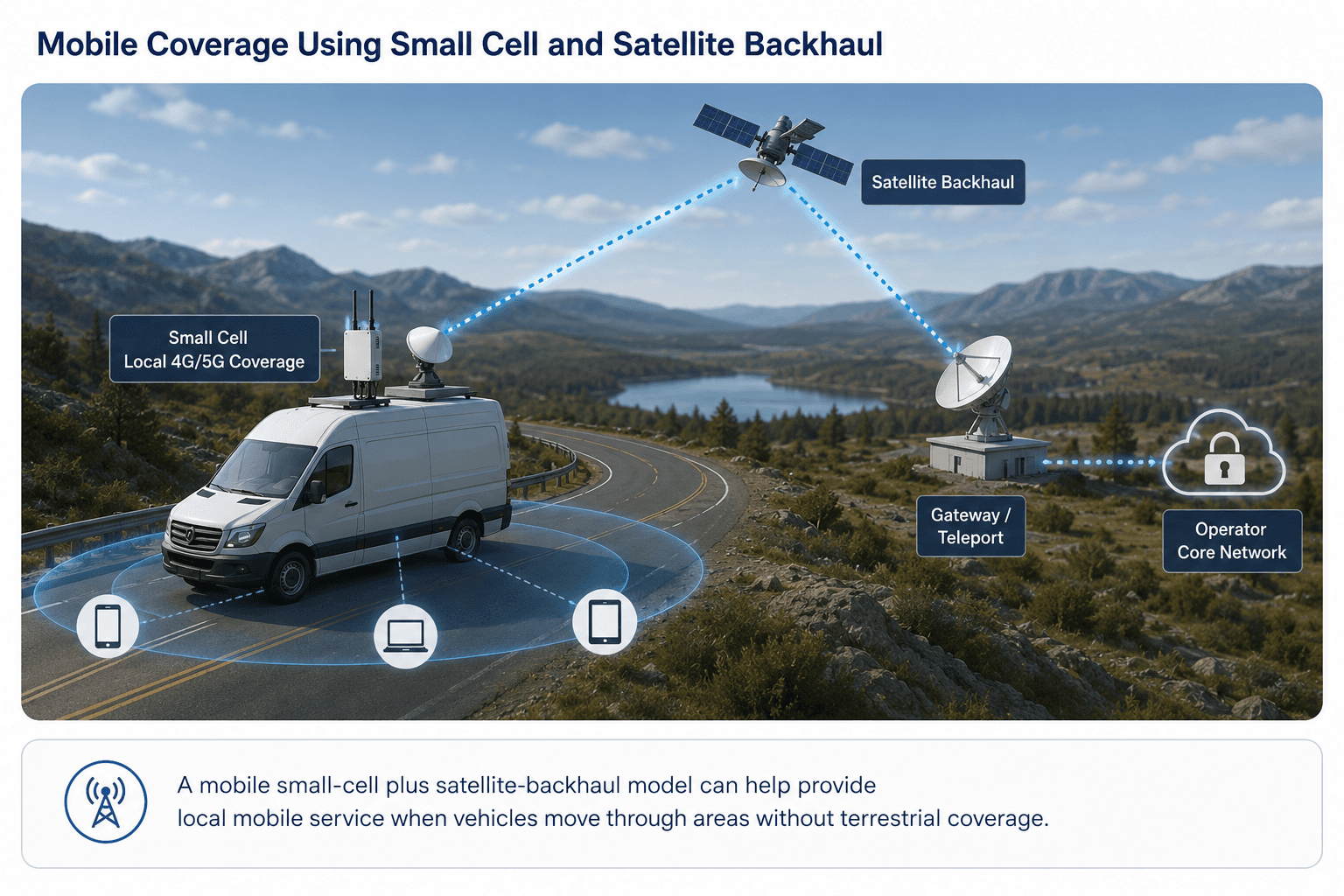
In rural areas, vehicles may move through valleys, mountainous roads, coastal areas, or sparsely populated regions where macro coverage is limited. For school transportation, emergency response, field services, or remote workforce mobility, losing connectivity can create safety and operational issues.
A mobile small-cell plus satellite-backhaul model can help maintain service when terrestrial coverage is unavailable.
Potential use cases include:
• School bus communications
• Public transport in remote areas
• Emergency or field service vehicles
• Utility service vehicles
• Remote worker transport
• Temporary mobile connectivity corridors
• Safety and location tracking
Technical value:
• Mobile coverage in areas without normal signal
• Local 4G/LTE access inside the vehicle
• Satellite backhaul for remote transport
• Integration into operator mobile services
• Potential support for GPS tracking, messaging, safety alerts, and operational data
This is especially relevant in countries with large rural territories, challenging terrain, or dispersed communities.
Road Construction and Heavy Machinery Connectivity
Another scenario involves a road construction contractor operating in a remote mountainous area. The material indicates that the site had no power, no buildings, and no network connectivity. The contractor needed data connectivity for measurement equipment, GPS correction, and worker communications.
This is an important industrial use case.
Road construction in remote terrain often depends on high-accuracy positioning and machine guidance systems. Heavy equipment may require correction data for GPS / GNSS systems to achieve precise grading, drilling, excavation, or road alignment.
The material indicates that the contractor needed approximately 1 cm accuracy for road-building operations, supported by correction data delivered over IP.
This means connectivity is not just for email or phone calls. It is part of the construction workflow.
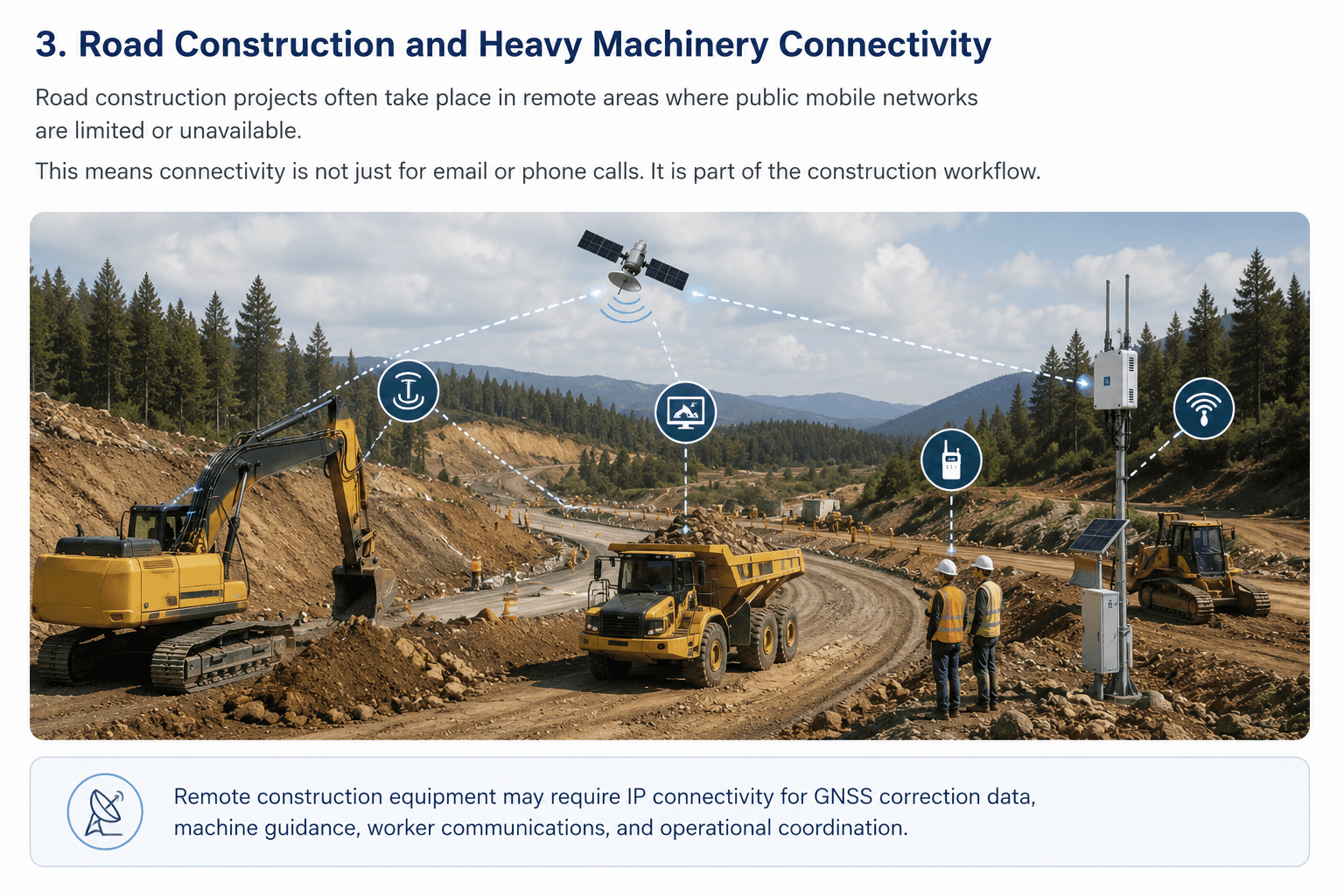
Service requirements may include:
• Data connection for surveying equipment
• IP transport for GPS / GNSS correction data
• Connectivity for heavy machinery
• Worker mobile communications
• Temporary deployment in remote terrain
• Equipment-mounted connectivity
• Operation in harsh outdoor conditions
• Ability to support sites with no fixed infrastructure
Small cells can support this type of use case by providing local mobile service at or near the construction site. Where fixed backhaul is unavailable, the deployment can use alternative backhaul options such as satellite.
Technical value:
• Temporary coverage for road construction zones
• Connectivity for GPS correction data
• Support for precision construction equipment
• Worker communications in remote areas
• Deployable coverage without permanent buildings
• Flexible backhaul for hard-to-reach locations
This is a very strong industrial connectivity story because it connects mobile coverage directly to production accuracy.
In road construction, poor connectivity can affect the ability to receive correction data, coordinate teams, and operate connected machinery. A local small-cell network can reduce that risk.
Warehouse Robot Control
The material also includes a warehouse robot-control scenario.
Warehouses increasingly depend on mobile robots, automated guided vehicles, handheld terminals, scanners, cameras, inventory systems, and real-time operational dashboards. These systems require reliable indoor wireless connectivity.
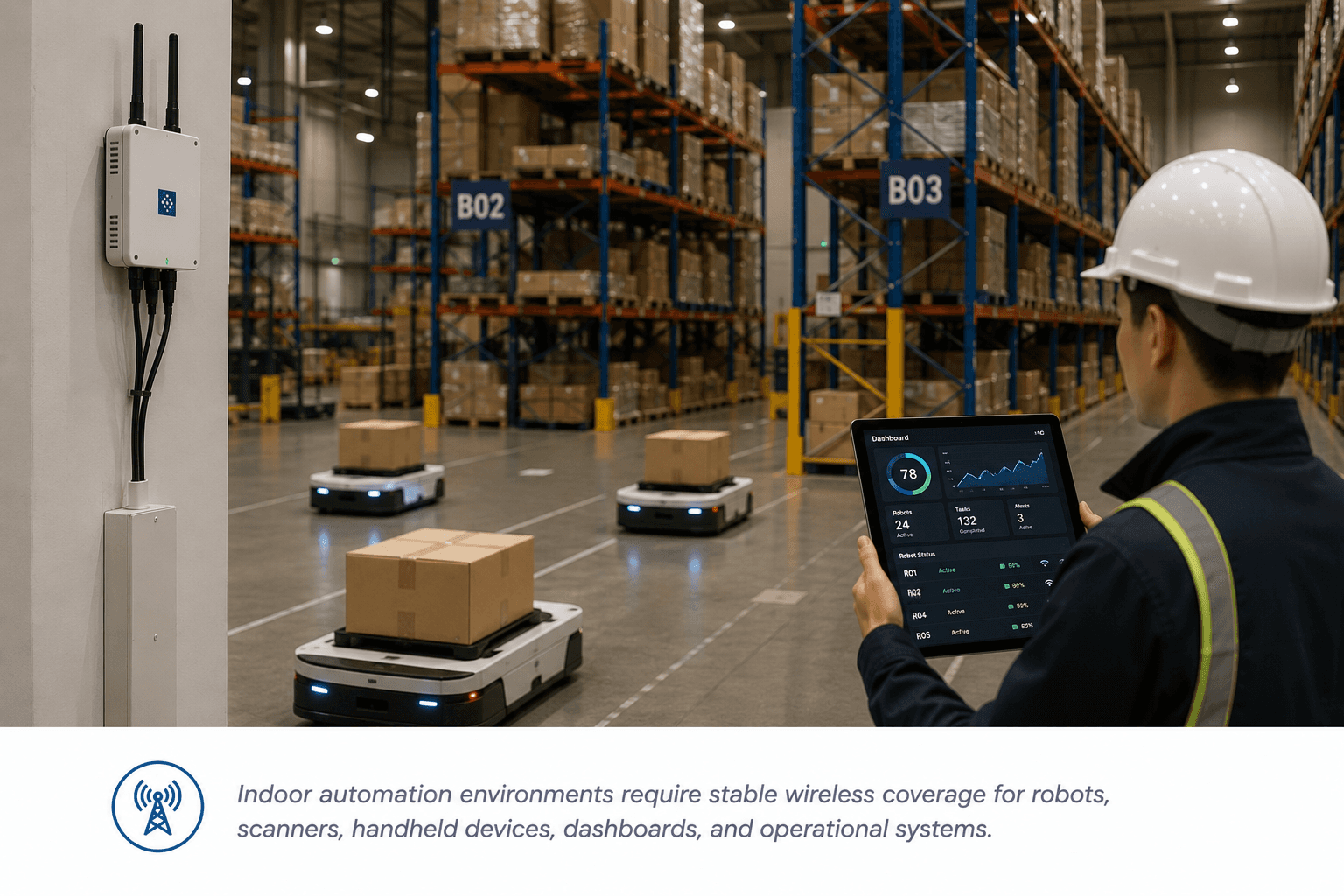
Warehouse environments can be difficult for traditional wireless because of:
• Metal shelving
• Moving equipment
• Dense inventory
• Large open indoor spaces
• Signal reflections
• High device density
• Mobile robots and forklifts
• Changing layouts
• Need for coverage in aisles and work zones
For robot control and warehouse automation, connectivity needs to be stable and predictable. A brief coverage gap can interrupt a robot workflow, delay an operation, or reduce process efficiency.
Small cells can provide targeted indoor mobile coverage for warehouse operations, supporting:
• Robot control
• Worker handheld devices
• Inventory systems
• Scanners and terminals
• Video monitoring
• Operational dashboards
• Mobile equipment connectivity
Technical value:
• Reliable indoor service
• Better coverage in difficult RF environments
• Support for mobile automation
• Secure device access
• Integration with enterprise and operator network services
• Scalable coverage zone by zone
This use case shows that CloudRAN.AI small cells are not only for remote rural sites. They can also support indoor enterprise and industrial environments where mobile service needs to be strengthened locally.
Retail Shop Indoor Coverage
The material includes a retail shop scenario showing indoor installation work.
Retail sites often suffer from poor indoor coverage due to building materials, interior layouts, energy-efficient glass, metal structures, basements, thick walls, or mall environments. At the same time, retail operations increasingly depend on mobile connectivity.
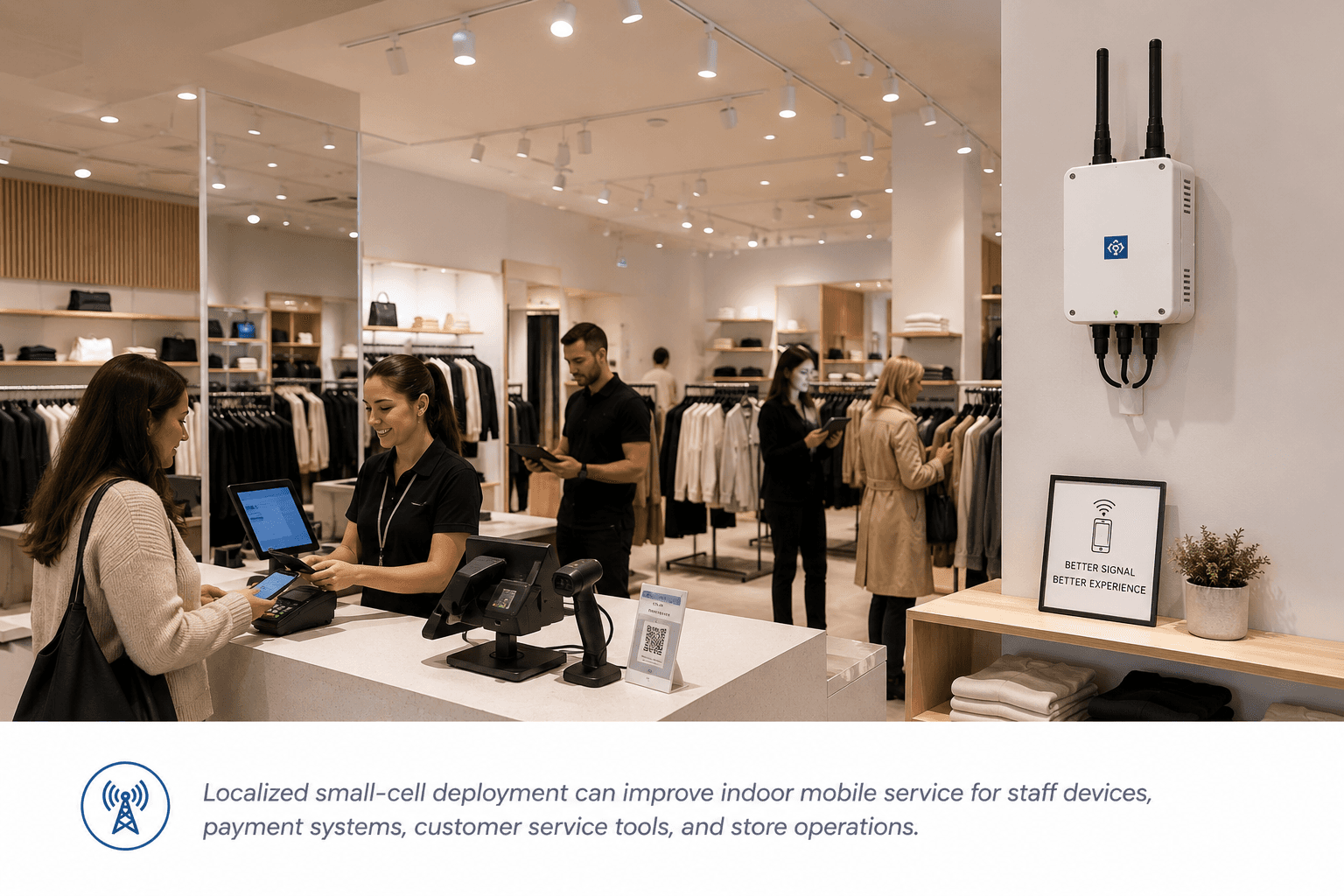
Retail connectivity may support:
• Staff mobile devices
• Payment terminals
• Customer service applications
• Inventory devices
• Digital signage
• Security systems
• Backup connectivity
• Customer mobile experience
• Store operations
For operators, indoor retail small cells can improve user experience and support business customers that need reliable service inside specific locations.
Technical value:
• Improved indoor coverage
• Better customer and staff mobile experience
• Support for payment and operational devices
• Localized deployment without large infrastructure buildout
• Stronger service quality in difficult indoor environments
This is a practical example of small-cell coverage extension for commercial environments.
Rally / Motorsports Telemetry
The deployment material includes a rally car connectivity scenario using a Cat-M device to gather data from each rally car and send it via LTE to a centralized server after each track. The data includes maximum speed and other vehicle data.

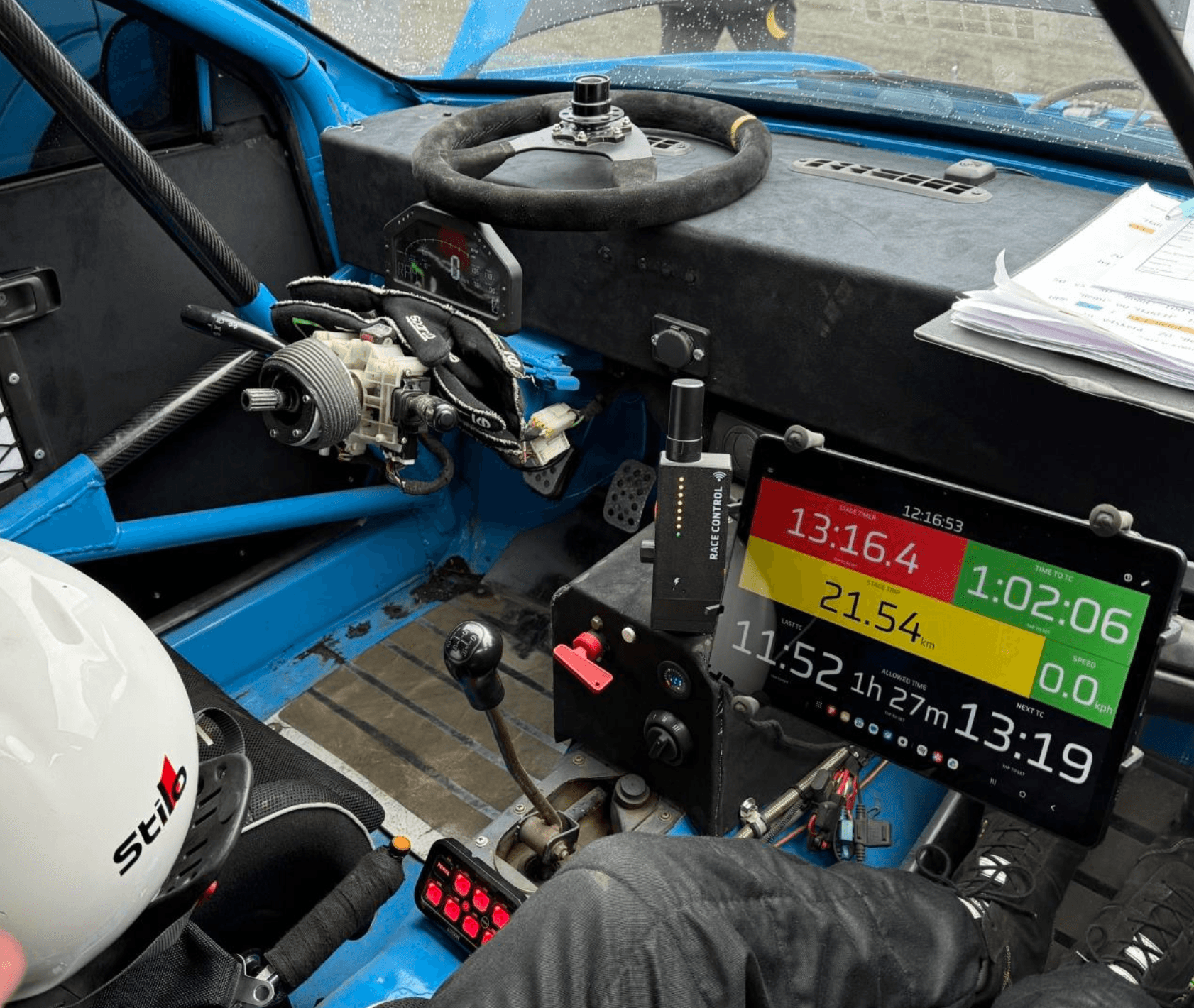
This is a specialized but useful example of mobile IoT connectivity.
Motorsport environments can be difficult because vehicles move quickly through remote areas, and coverage may vary along tracks. Event organizers and teams may need to collect vehicle data, timing information, telemetry, speed records, and safety-related information.
The use of Cat-M / LTE connectivity allows vehicle data to be transmitted to centralized systems.
Potential requirements include:
• Vehicle telemetry
• Speed data
• Location data
• Event timing
• Safety monitoring
• Post-stage data transfer
• Low-power IoT connectivity
• Coverage in remote or temporary event areas
Technical value:
• LTE-based IoT data transmission
• Support for mobile assets
• Centralized collection of vehicle data
• Potential integration with event systems
• Connectivity for temporary high-mobility use cases
This shows the flexibility of operator small-cell and LTE infrastructure beyond conventional fixed-site coverage.
Remote Geothermal Spa / Tourism Facility
Another highlighted scenario involves a new geothermal nature spa and bathing pool built in a volcanic lava area. The material states that indoor connectivity would be impossible without a dedicated indoor solution, and that four small cells solve indoor service at the site.
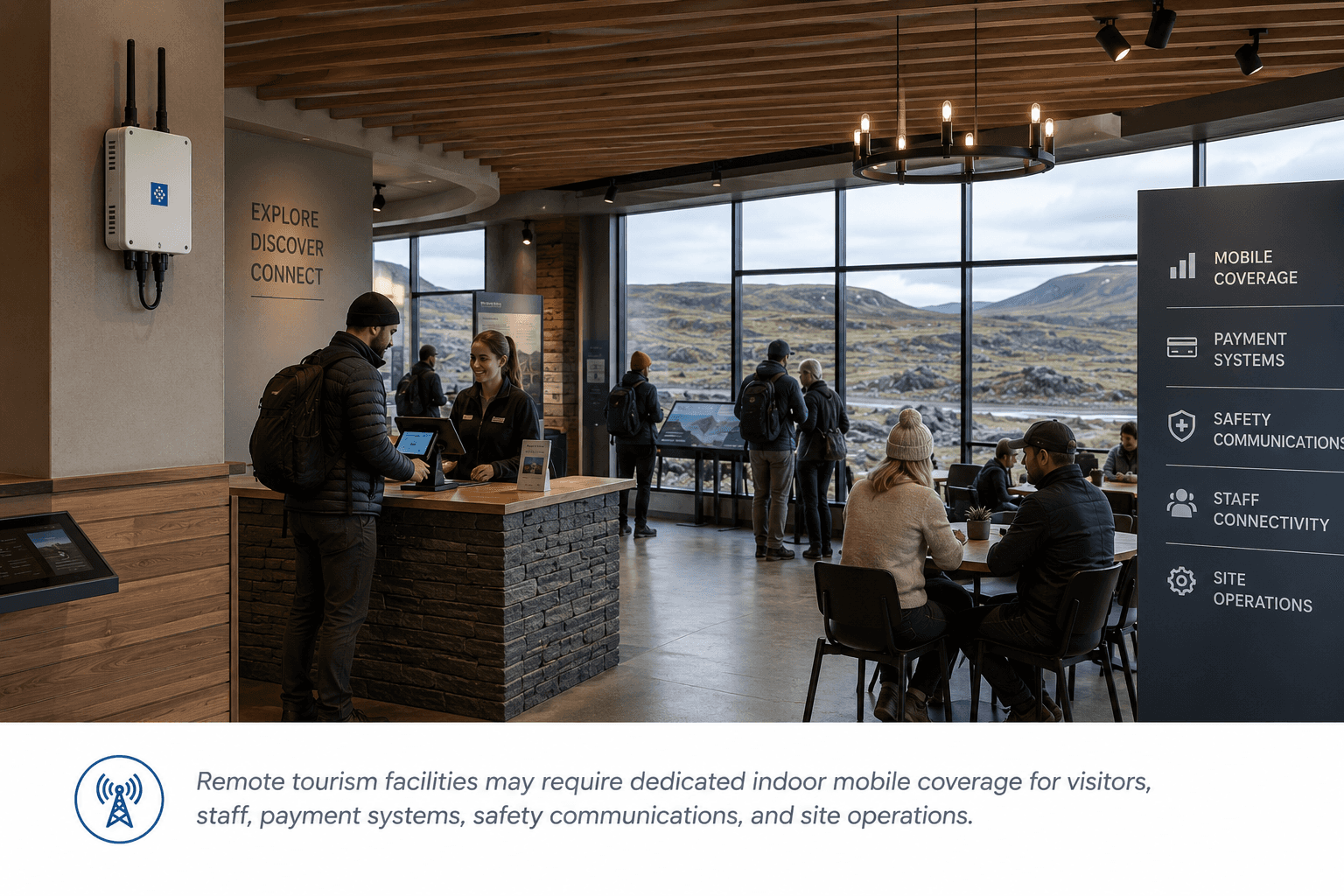
Remote tourism sites can have unique connectivity requirements.
They may be located in natural areas, mountainous regions, coastal zones, geothermal areas, or remote landscapes where normal mobile coverage is weak. But visitors, staff, payment systems, safety teams, booking systems, and facility operations still require connectivity.
A geothermal spa or remote tourism facility may need:
• Indoor mobile coverage
• Staff communications
• Visitor connectivity
• Payment terminals
• Access control systems
• Safety and emergency communications
• Operational systems
• Security monitoring
• Backup communications
A dedicated indoor small-cell deployment can provide mobile service inside buildings where macro signal cannot reach, especially when the structure is built in difficult terrain or with materials that block radio signals.
Technical value:
• Reliable indoor mobile service
• Localized coverage in a remote facility
• Support for visitor and staff connectivity
• Improved safety and operational resilience
• Flexible deployment in hard-to-cover natural environments
This use case is especially relevant because remote tourism sites are often economically important, but traditional connectivity deployment may be difficult.
Technical Architecture
The deployment demonstrates a flexible small-cell architecture for remote and industrial connectivity.
Core elements include:
CloudRAN.AI Flare125 Small Cells
Flare125 units provide localized mobile coverage for indoor, outdoor, remote, and industrial environments.
In this deployment, 40 Flare125 base stations have been deployed across multiple use cases.
The small cells are used to bring mobile coverage closer to users, devices, machines, and operational systems.
Operator Network Integration
The small cells connect back into the operator mobile network architecture. This allows devices to access mobile service through the operator network while receiving improved local coverage from the small-cell layer.
This model is important because it allows the operator to extend service without relying only on macro network expansion.
Flexible Backhaul
Different sites require different backhaul options.
The material shows examples involving satellite backhaul, including Starlink, for remote or mobile coverage scenarios.
Potential backhaul options include:
• Satellite
• Fixed broadband
• Fiber
• Microwave
• Existing enterprise connectivity
• Temporary transport links
This flexibility is critical for remote sites where no single backhaul model fits all environments.
Secure Transport
The illustrated architecture shows secure connection into the operator network environment. For operator deployments, secure backhaul and core integration are essential.
Relevant considerations include:
• VPN or secure tunnel transport
• Core network integration
• Subscriber authentication
• Traffic routing
• Service continuity
• Policy control
• Operational monitoring
Indoor and Outdoor Coverage Models
The deployment includes both indoor and outdoor use cases.
Indoor examples include seafood production facilities, warehouse robot control, retail shops, and remote tourism buildings.
Outdoor and mobile examples include construction sites, school buses, rally cars, and remote field operations.
This shows that the same small-cell approach can support multiple coverage models:
• One cell per building
• Indoor coverage zone
• Vehicle-mounted or mobile coverage
• Temporary site coverage
• Remote industrial area coverage
• Specialized event coverage
Service Requirements
The deployment supports a wide range of technical and operational requirements.
Key service requirements include:
• Reliable local mobile coverage
• Indoor coverage in difficult RF environments
• Remote-site service extension
• Backhaul flexibility
• Worker communications
• Equipment connectivity
• IP transport for operational systems
• GPS / GNSS correction data delivery
• Mobile asset telemetry
• IoT data transmission
• Video and monitoring support
• Robot-control support
• Visitor and staff connectivity
• Secure integration with operator network infrastructure
• Rapid deployment in temporary or hard-to-reach locations
This diversity is important. It shows that the deployment is not one isolated use case. It is a repeatable connectivity model that can support many different industrial and remote scenarios.
Why Small Cells Are the Right Fit
For remote and industrial coverage, small cells can be more practical than traditional infrastructure in several cases.
Macro towers are important for broad-area coverage, but they may not solve local indoor coverage problems, specific industrial site requirements, or temporary field deployments.
Small cells can fill that gap.
They are useful when:
• Coverage is needed inside a specific building
• A remote facility needs local mobile service
• A mobile asset enters coverage dead zones
• A temporary worksite needs connectivity
• A construction zone lacks infrastructure
• Industrial equipment needs mobile data
• A site needs fast deployment without waiting for macro buildout
• A business customer requires service improvement in a targeted area
This makes small cells a practical tool for operators serving enterprise, industrial, rural, and public-service customers.
CloudRAN.AI Product Fit
CloudRAN.AI’s private and small-cell portfolio is designed for real-world deployments where flexibility, coverage, and deployment simplicity matter.
For this remote rural deployment, relevant CloudRAN.AI capabilities include:
• Flare125 small-cell deployment
• Compact site coverage
• Indoor and outdoor deployment flexibility
• Operator network integration
• Support for remote and industrial use cases
• Compatibility with multiple backhaul approaches
• Deployment across buildings, vehicles, worksites, and remote facilities
• Scalable model across many sites
• Support for enterprise and service-provider use cases
CloudRAN.AI, part of the Cloudnet.ai portfolio, delivers private 4G/5G and small-cell solutions for enterprise and industrial deployments, complementing Cloudnet.ai’s broader focus on AI-powered telecom operations, BSS modernization, and network automation.
The strategic value is that operators can use CloudRAN.AI technology to address coverage and connectivity gaps that are difficult to solve through traditional macro network expansion alone.
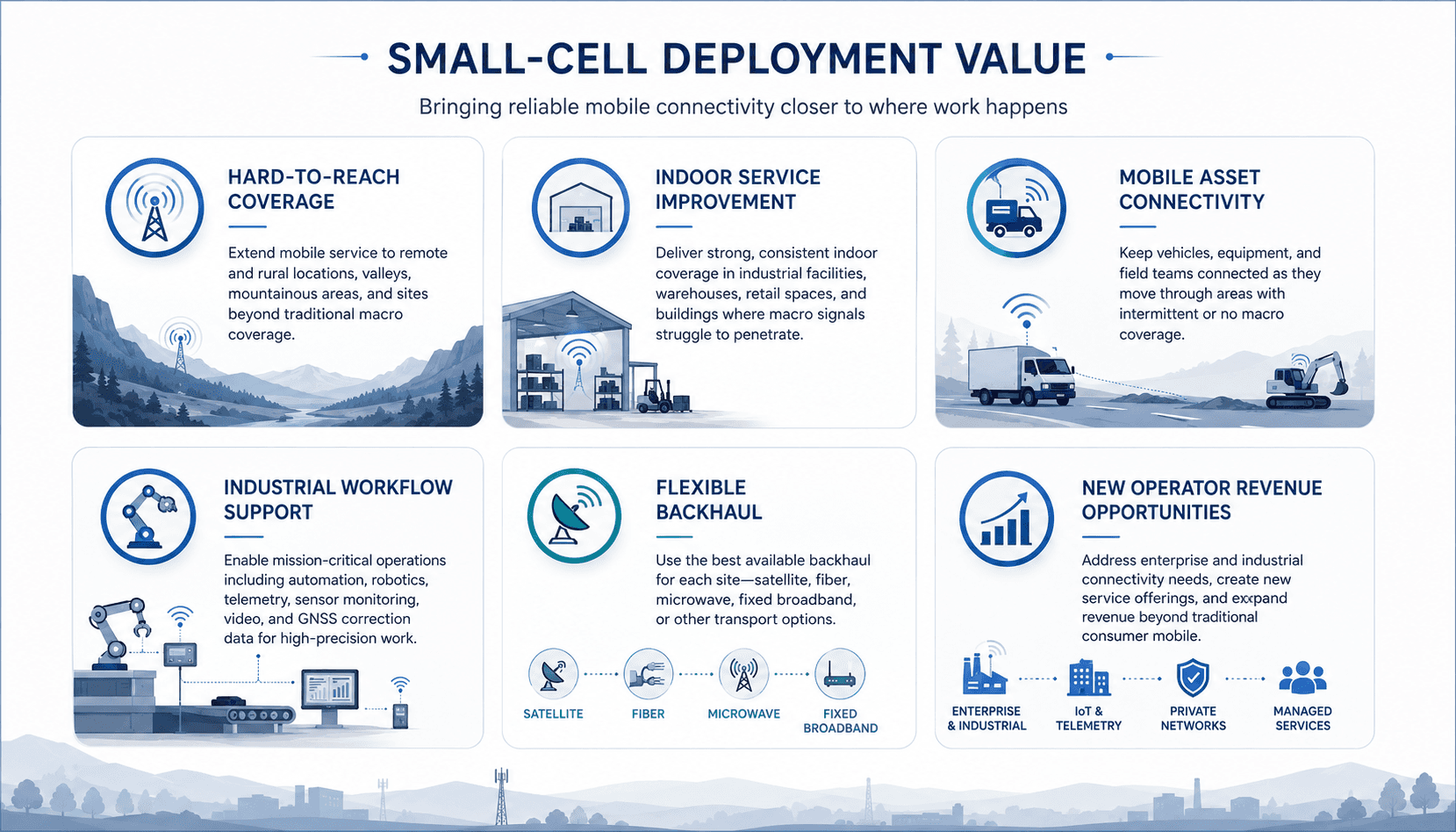
Business and Operational Value
The deployment provides several types of value.
Extending Coverage into Hard-to-Reach Areas
Small cells allow operators to provide service in locations where macro coverage is weak, blocked, or unavailable.
This is especially useful for rural industrial sites, remote facilities, and indoor environments.
Supporting Industrial Operations
The deployment supports real industrial workflows, including aquaculture monitoring, construction equipment connectivity, GPS correction data, warehouse robot control, and field operations.
This positions mobile connectivity as part of operational infrastructure, not just a consumer service.
Enabling New Operator Revenue Opportunities
For telecom operators, targeted small-cell deployments can create new enterprise revenue opportunities.
Instead of only selling general mobile service, operators can support specific business needs:
• Industrial coverage
• Indoor service improvement
• Remote-site connectivity
• Mobile operational coverage
• Temporary connectivity
• IoT and telemetry
• Safety and workforce communications
Improving Customer Retention and Service Quality
Enterprise and industrial customers are more likely to value operators that can solve difficult connectivity problems. A small-cell portfolio allows the operator to respond to customer-specific requirements with a practical deployment model.
Creating a Repeatable Deployment Model
The fact that 40 Flare125 units have been deployed across multiple use cases suggests that the model is repeatable.
This can support future expansion into other verticals, buildings, sites, and specialized customer environments.
Strategic Value for CloudRAN.AI
This deployment is strategically important because it shows CloudRAN.AI small cells being used not only in lab environments or single-site demos, but across a variety of practical operational scenarios.
The use cases span:
• Rural industrial production
• Aquaculture
• Remote construction
• Heavy machinery
• Mobile school-bus coverage
• Warehouse automation
• Retail indoor coverage
• Rally / motorsport telemetry
• Remote tourism facilities
That range matters.
It shows that CloudRAN.AI small-cell technology can support a broader operator strategy for enterprise and rural coverage extension.
For CloudRAN.AI, the key messages are:
• Small cells can extend operator service into hard-to-cover environments
• Remote and industrial sites need targeted, local coverage
• Flexible backhaul, including satellite, can unlock difficult locations
• Enterprise customers need connectivity for operations, not just phones
• Small-cell deployments can support multiple verticals with one repeatable architecture
• Operators can use small cells to create new enterprise and industrial service opportunities
This aligns strongly with CloudRAN.AI’s wider positioning around practical, deployable private 4G/5G and enterprise connectivity solutions.
Wrap Up
This rural deployment demonstrates how CloudRAN.AI small cells can support remote industrial, mobile, indoor, and specialized connectivity use cases across difficult environments.
With 40 Flare125 base stations deployed, the project shows how compact small cells can extend reliable mobile service into places where conventional coverage is limited or impractical.
The deployment supports a wide range of scenarios, including seafood and aquaculture facilities, mobile school-bus connectivity, road construction and heavy machinery operations, warehouse robot control, retail indoor coverage, motorsport telemetry, and remote tourism infrastructure.
The common theme across these use cases is practical connectivity. Each scenario requires reliable local mobile service for people, devices, equipment, or operational systems.
For the operator, this creates a flexible way to serve enterprise and rural customers with targeted coverage solutions. For CloudRAN.AI, it demonstrates how small-cell technology can support real-world industrial and remote connectivity needs at scale.
As industrial operations, rural services, mobile assets, and remote facilities become more connected, small cells will become an increasingly important tool for extending mobile networks beyond traditional coverage models.
CloudRAN.AI Flare125 provides a compact, deployable, and operator-ready way to bring mobile connectivity closer to where work actually happens.